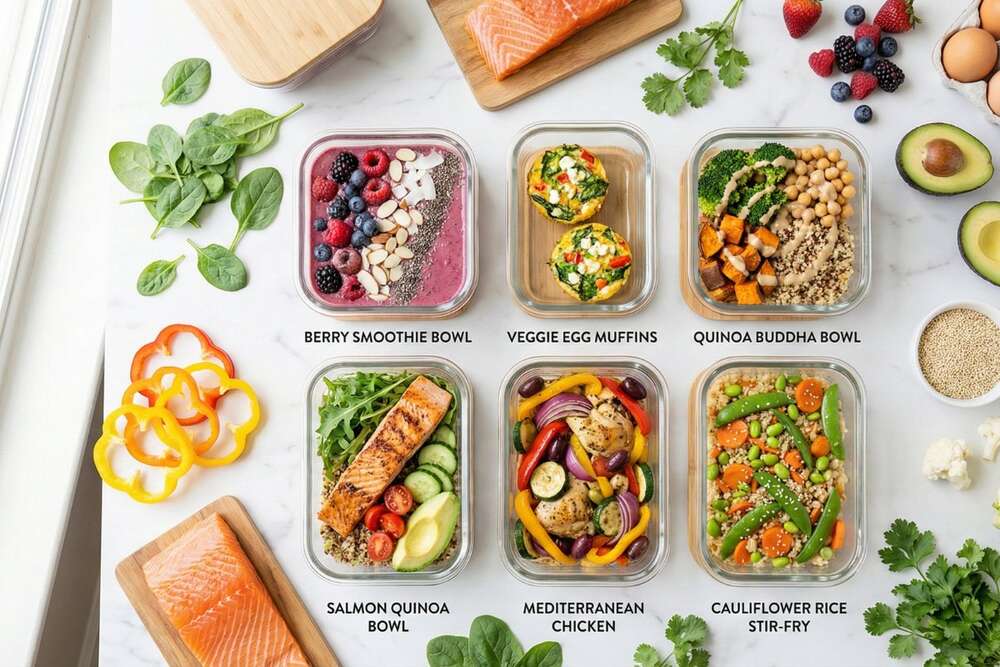
PCOS Friendly Meals: 6 Easy Recipes That Balance Hormones
The doctor looked at my ultrasound results and said the words I’d been dreading: “You have PCOS.”
I was 28 years old. I’d gained 25 pounds in one year despite eating “healthy” and exercising regularly. My periods disappeared for months at a time. Dark patches appeared on my neck. Hair grew where it shouldn’t. I felt exhausted constantly.
“You’ll struggle with weight your entire life,” she said matter-of-factly. “Many women with PCOS do. We can try medication to manage symptoms.”
I left that appointment feeling defeated and scared. Would I ever feel normal again? Would I ever lose this weight?
I spent weeks researching PCOS obsessively. Every article mentioned the same thing: diet matters more than anything else for managing PCOS. Not just any diet – specific foods that help balance hormones and reduce insulin resistance.
I started making PCOS-friendly meals. Not restrictive diet food. Real, satisfying meals designed to work with my body instead of against it.
Within three weeks, I had more energy. My sugar cravings disappeared.
Two months in, I’d lost 8 pounds without feeling hungry or deprived.
Six months later, I’d lost 15 pounds total. But more importantly, my period came back regular as clockwork. My skin cleared. The dark patches faded. I felt like myself again.
These six PCOS friendly meals became my foundation. Each one balances blood sugar, reduces inflammation, and supports hormone health.
Let me show you exactly what worked.
Why Food Matters More Than Anything for PCOS
PCOS isn’t just about cysts on your ovaries. It’s a metabolic and hormonal disorder that affects your entire body.
The core problem? Insulin resistance. Your cells don’t respond properly to insulin, so your body produces more and more. Research published in the Journal of Clinical Endocrinology & Metabolism shows up to 70% of women with PCOS have insulin resistance.
High insulin triggers your ovaries to produce excess testosterone. This causes the symptoms we hate – weight gain, irregular periods, acne, unwanted hair growth.
Why the right foods change everything:
They stabilize blood sugar and reduce insulin spikes. Studies show eating low-glycemic foods significantly improves PCOS symptoms.
They reduce chronic inflammation that worsens PCOS. Anti-inflammatory foods help balance hormones naturally.
They provide nutrients your body needs to produce hormones properly – healthy fats, quality protein, vitamins, minerals.
My experience: Before I understood this, I ate “healthy” foods that spiked my blood sugar – whole wheat bread, fruit smoothies, low-fat yogurt. My body couldn’t handle the blood sugar swings. Once I switched to PCOS-friendly meals, everything changed.
Similar principles to blood sugar balancing breakfast recipes, but specifically designed for PCOS management.
What Makes a Meal PCOS-Friendly
Not all healthy meals work for PCOS. These specific elements matter:
High Protein (25-30g per meal): Protein stabilizes blood sugar and keeps you full for hours. Research shows high-protein diets improve insulin sensitivity in women with PCOS.
Low Glycemic Carbs: Choose carbs that don’t spike blood sugar – vegetables, quinoa, sweet potatoes, berries. Avoid white bread, white rice, sugary foods.
Healthy Fats: Omega-3s and monounsaturated fats reduce inflammation. Include avocado, nuts, olive oil, fatty fish.
Anti-Inflammatory Foods: Leafy greens, berries, turmeric, ginger help reduce the chronic inflammation that worsens PCOS.
Fiber-Rich: Fiber slows sugar absorption and helps your body eliminate excess hormones. Aim for 25-30g daily.
Works perfectly with strategies in high protein breakfast for complete PCOS nutrition.
Recipe 1: High Protein PCOS Smoothie Bowl
This became my go-to breakfast. Balanced, satisfying, and doesn’t spike my blood sugar like regular smoothies did.
High Protein PCOS Smoothie Bowl
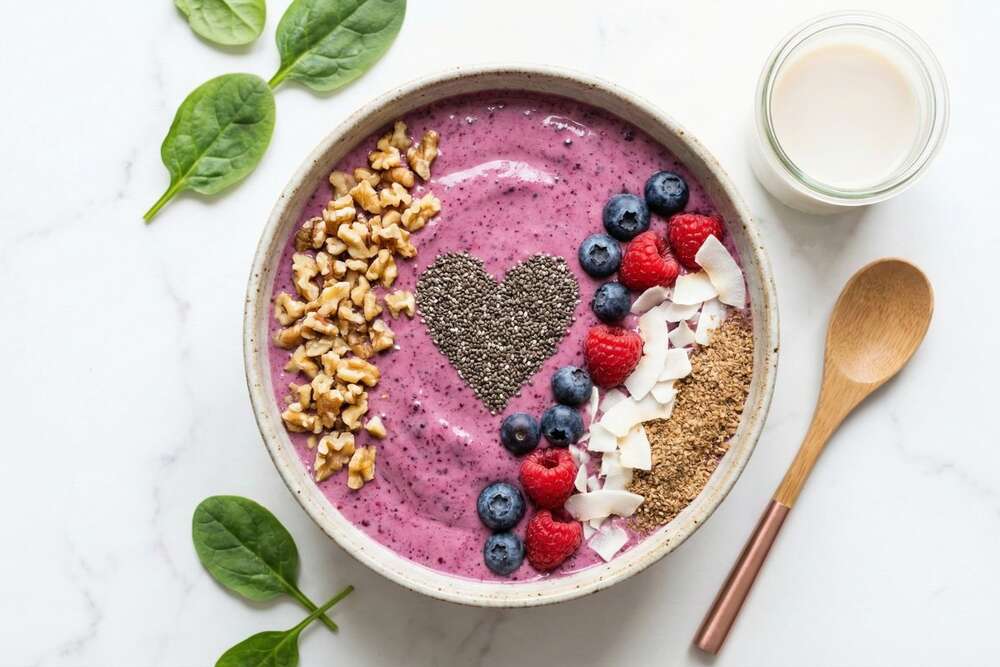
⏱️ Prep: 5 min | 🍳 Cook: 0 min | 👥 Serves: 1
💪 Protein: 28g | 📊 Calories: 360 | 🥣 Carbs: 32g | 🥑 Fat: 15g
Ingredients:
Base:
- ½ cup plain Greek yogurt (full-fat)
- 1 scoop vanilla protein powder
- ½ cup frozen blueberries
- ½ cup unsweetened almond milk
- 1 tablespoon ground flaxseed
- 1 tablespoon almond butter
- Handful of spinach
- ½ teaspoon cinnamon
Toppings:
- 2 tablespoons chopped walnuts
- 1 tablespoon chia seeds
- 5-6 fresh berries
- Unsweetened coconut flakes
Instructions:
- Blend Greek yogurt, protein powder, frozen blueberries, almond milk, flaxseed, almond butter, spinach, and cinnamon until smooth and thick.
- Pour into bowl.
- Top with walnuts, chia seeds, fresh berries, and coconut flakes.
- Eat immediately with a spoon.
Pro Tip: Use full-fat Greek yogurt, not low-fat. The healthy fats help balance hormones and keep you satisfied. First time I made this with low-fat yogurt, I was hungry two hours later.
Blood Sugar Impact: This keeps my blood sugar stable for 4-5 hours. No energy crashes.
Similar to protein smoothie recipes but specifically balanced for PCOS.
Recipe 2: Veggie-Packed Egg Muffins
Perfect for meal prep. Make Sunday, eat all week. High protein, low carb, keeps blood sugar stable.
Veggie-Packed Egg Muffins
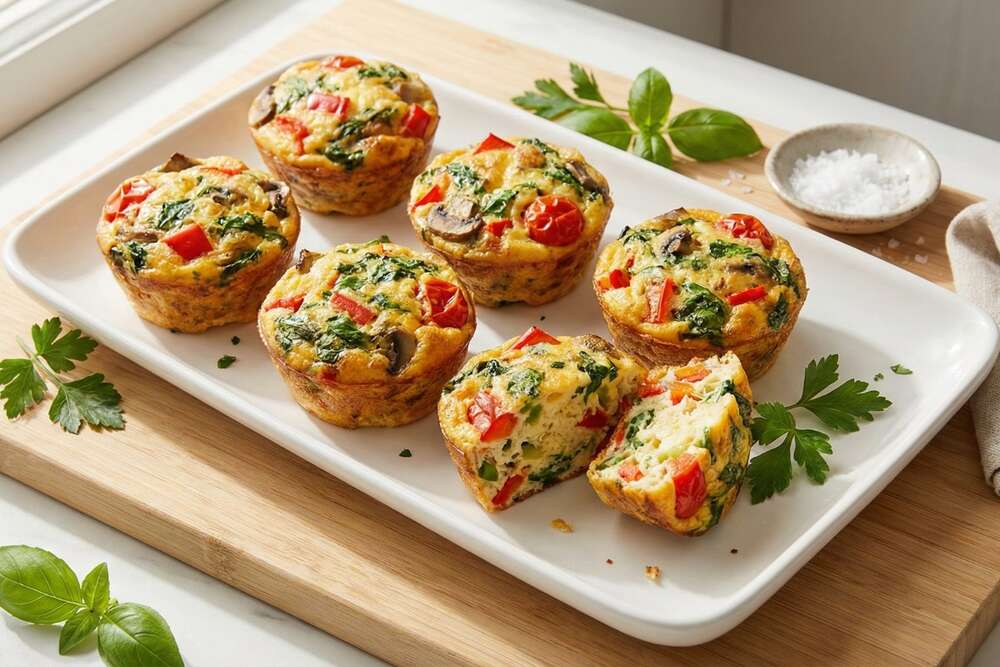
⏱️ Prep: 10 min | 🍳 Cook: 20 min | 👥 Serves: 6 (2 muffins each)
💪 Protein: 18g | 📊 Calories: 220 | 🥣 Carbs: 6g | 🥑 Fat: 14g
Ingredients:
- 10 large eggs
- ¼ cup unsweetened almond milk
- 1 cup spinach, chopped
- ½ cup bell peppers, diced
- ½ cup mushrooms, diced
- ¼ cup red onion, diced
- ½ cup cherry tomatoes, halved
- ½ cup shredded cheese (optional)
- 2 tablespoons olive oil
- 1 teaspoon garlic powder
- Salt and pepper to taste
- Fresh herbs (basil or parsley)
Instructions:
- Preheat oven to 375°F. Grease 12-cup muffin tin with olive oil or line with silicone cups.
- Heat remaining olive oil in skillet. Sauté peppers, mushrooms, and onion for 5 minutes until softened.
- In large bowl, whisk eggs and almond milk. Add garlic powder, salt, pepper.
- Stir in spinach, sautéed vegetables, tomatoes, cheese, and herbs.
- Pour mixture evenly into muffin cups, filling ¾ full.
- Bake 18-20 minutes until set and lightly golden.
- Cool 5 minutes before removing from tin.
Pro Tip: These reheat beautifully in microwave for 45 seconds. I make a batch every Sunday and eat them throughout the week.
Storage: Refrigerator 5 days. Freezer up to 3 months.
Great for healthy breakfast meal prep routines.
Recipe 3: Anti-Inflammatory Buddha Bowl
This bowl fights the chronic inflammation that makes PCOS worse. Colorful, delicious, incredibly satisfying.
Anti-Inflammatory Buddha Bowl
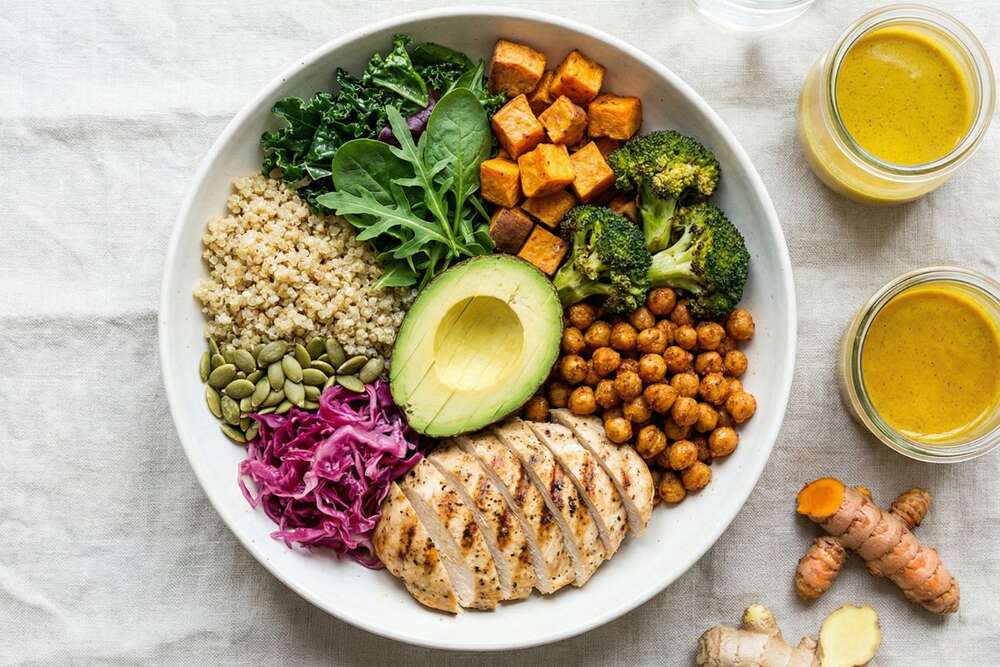
⏱️ Prep: 15 min | 🍳 Cook: 20 min | 👥 Serves: 2
💪 Protein: 26g | 📊 Calories: 420 | 🥣 Carbs: 38g | 🥑 Fat: 18g
Ingredients:
Base:
- 1 cup cooked quinoa
- 2 cups mixed greens (spinach, kale, arugula)
- 1 cup roasted sweet potato cubes
- 1 cup roasted broccoli
- ½ cup chickpeas, roasted with spices
Protein:
- 8 oz grilled chicken breast, sliced
Toppings:
- ½ avocado, sliced
- 2 tablespoons pumpkin seeds
- 2 tablespoons sauerkraut
Dressing:
- 2 tablespoons olive oil
- 1 tablespoon apple cider vinegar
- 1 teaspoon Dijon mustard
- ½ teaspoon turmeric
- Pinch of black pepper
- Salt to taste
Instructions:
- Roast sweet potato cubes and broccoli at 425°F for 20 minutes with olive oil, salt, pepper.
- Toss chickpeas with cumin, paprika, garlic powder. Roast alongside vegetables.
- Grill chicken breast seasoned with salt, pepper, herbs until 165°F internal temperature.
- Whisk all dressing ingredients together.
- Divide quinoa and greens between two bowls.
- Arrange roasted vegetables, chickpeas, sliced chicken, avocado, and pumpkin seeds on top.
- Add spoonful of sauerkraut.
- Drizzle with dressing.
Pro Tip: The turmeric in the dressing is crucial. Studies show curcumin from turmeric reduces inflammation and may improve insulin sensitivity.
Meal Prep: Components stay fresh 4 days refrigerated separately. Assemble fresh when eating.
Similar to approaches in vegan meal prep for plant-based PCOS options.
Recipe 4: Salmon and Quinoa Power Bowl
Omega-3s from salmon are incredibly beneficial for PCOS. This became my twice-weekly lunch staple.
Salmon and Quinoa Power Bowl
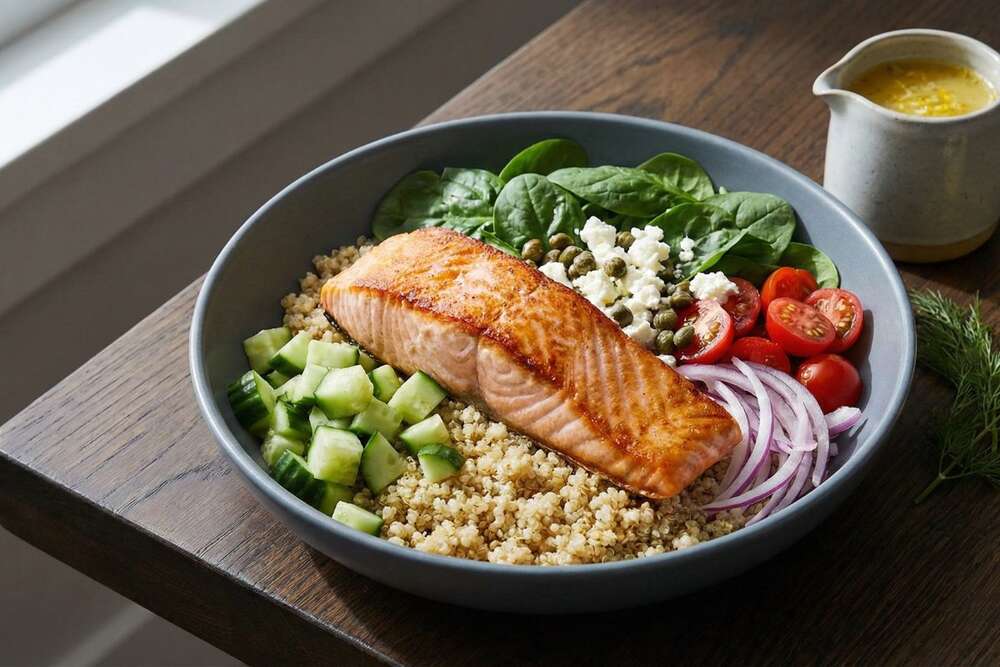
⏱️ Prep: 10 min | 🍳 Cook: 15 min | 👥 Serves: 2
💪 Protein: 32g | 📊 Calories: 450 | 🥣 Carbs: 35g | 🥑 Fat: 20g
Ingredients:
- 2 salmon fillets (6 oz each)
- 1 cup cooked quinoa
- 2 cups baby spinach
- 1 cup cucumber, diced
- 1 cup cherry tomatoes, halved
- ¼ red onion, thinly sliced
- ¼ cup feta cheese, crumbled
- 2 tablespoons capers
Salmon Seasoning:
- 1 tablespoon olive oil
- 1 teaspoon garlic powder
- 1 teaspoon dried dill
- Lemon zest
- Salt and pepper
Lemon Dressing:
- 2 tablespoons olive oil
- Juice of 1 lemon
- 1 teaspoon Dijon mustard
- 1 clove garlic, minced
- Salt and pepper
Instructions:
- Preheat oven to 400°F.
- Place salmon fillets on lined baking sheet. Brush with olive oil, season with garlic powder, dill, lemon zest, salt, pepper.
- Bake 12-15 minutes until salmon flakes easily.
- Whisk all dressing ingredients together.
- Divide quinoa between two bowls. Top with spinach.
- Arrange cucumber, tomatoes, red onion around bowl.
- Place cooked salmon on top. Sprinkle with feta and capers.
- Drizzle with lemon dressing.
Pro Tip: Wild-caught salmon has more omega-3s than farmed. Worth the extra cost for PCOS benefits.
Why This Works: Research shows omega-3 fatty acids improve insulin sensitivity and reduce inflammation in women with PCOS.
Pairs well with high protein foods strategies for complete nutrition.
Recipe 5: Sheet Pan Mediterranean Chicken
Easy weeknight dinner. Everything cooks on one pan. Minimal cleanup, maximum nutrition.
Sheet Pan Mediterranean Chicken
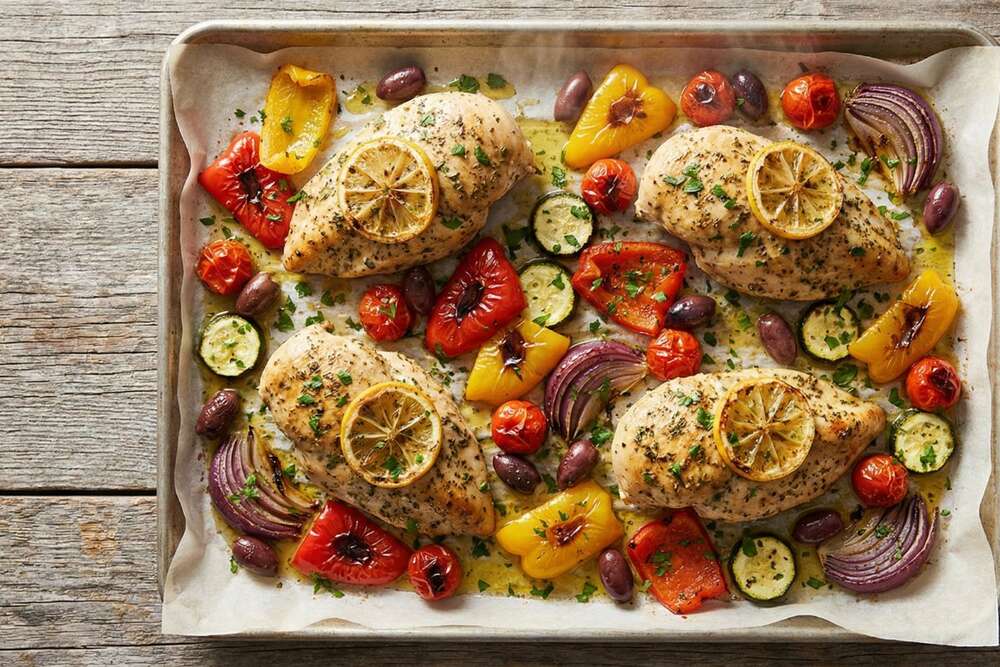
⏱️ Prep: 10 min | 🍳 Cook: 30 min | 👥 Serves: 4
💪 Protein: 38g | 📊 Calories: 380 | 🥣 Carbs: 22g | 🥑 Fat: 16g
Ingredients:
- 4 chicken breasts (6 oz each)
- 2 cups cherry tomatoes
- 1 red bell pepper, cut into chunks
- 1 yellow bell pepper, cut into chunks
- 1 zucchini, sliced
- 1 red onion, cut into wedges
- ½ cup Kalamata olives
- 3 tablespoons olive oil
- 4 cloves garlic, minced
- 2 teaspoons dried oregano
- 1 teaspoon dried basil
- 1 lemon, sliced
- Fresh parsley
- Salt and pepper
Instructions:
- Preheat oven to 425°F. Line large baking sheet with parchment paper.
- Arrange chicken breasts on one side of pan.
- Toss vegetables (tomatoes, peppers, zucchini, onion, olives) with 2 tablespoons olive oil, garlic, oregano, basil, salt, pepper.
- Arrange vegetables around chicken.
- Brush chicken with remaining olive oil. Season with oregano, salt, pepper.
- Place lemon slices on top of chicken.
- Roast 28-30 minutes until chicken reaches 165°F and vegetables are tender and slightly charred.
- Garnish with fresh parsley.
Pro Tip: Don’t crowd the pan. Use two pans if needed. Vegetables need space to roast properly, not steam.
Leftover Magic: Shred leftover chicken, mix with vegetables, serve over cauliflower rice or greens for easy lunches.
Similar one-pan approach to slow cooker high protein meals for easy cooking.
Recipe 6: Cauliflower Rice Stir-Fry
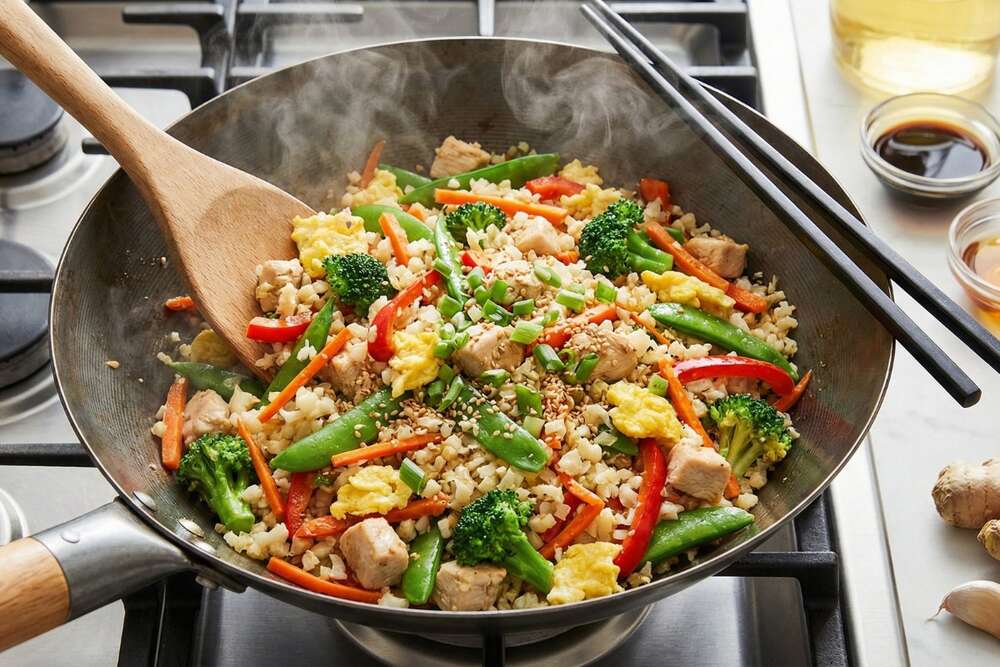
Low-carb comfort food that doesn’t spike blood sugar. This satisfied my Chinese takeout cravings without the guilt.
Cauliflower Rice Stir-Fry
⏱️ Prep: 10 min | 🍳 Cook: 15 min | 👥 Serves: 3
💪 Protein: 28g | 📊 Calories: 320 | 🥣 Carbs: 18g | 🥑 Fat: 14g
Ingredients:
- 1 lb chicken breast or shrimp, diced
- 4 cups cauliflower rice (1 large head riced)
- 2 cups mixed vegetables (broccoli, snap peas, carrots, bell peppers)
- 3 eggs, beaten
- 3 tablespoons coconut oil
- 3 cloves garlic, minced
- 1 tablespoon fresh ginger, grated
- 3 tablespoons coconut aminos or low-sodium soy sauce
- 1 tablespoon sesame oil
- 2 green onions, sliced
- Sesame seeds for garnish
Instructions:
- Heat 1 tablespoon coconut oil in large skillet or wok over high heat.
- Add diced chicken, cook 6-8 minutes until golden and cooked through. Remove to plate.
- Add another tablespoon coconut oil. Pour in beaten eggs. Scramble quickly, breaking into small pieces. Remove to plate.
- Add remaining coconut oil, garlic, and ginger. Cook 30 seconds until fragrant.
- Add mixed vegetables. Stir-fry 4-5 minutes until tender-crisp.
- Add cauliflower rice. Stir-fry 5 minutes until tender but not mushy.
- Return chicken and eggs to pan. Add coconut aminos and sesame oil. Toss everything together.
- Cook 2 more minutes to heat through.
- Garnish with green onions and sesame seeds.
Pro Tip: Don’t overcook cauliflower rice or it gets mushy and watery. Five minutes is enough.
Blood Sugar Win: Regular fried rice with white rice would spike my blood sugar terribly. This keeps it perfectly stable.
Great alongside high protein chicken and rice when you need variety.
PCOS Meal Prep Strategy
I prep these meals every Sunday and Wednesday. Keeps me consistent without getting overwhelmed.
Sunday Prep (90 minutes):
- Make egg muffins for the week (12 muffins)
- Cook quinoa and cauliflower rice (store separately)
- Grill 4 chicken breasts, 4 salmon fillets
- Roast vegetables (sweet potato, broccoli, peppers)
- Prep smoothie ingredients in individual bags
Wednesday Refresh (45 minutes):
- Make Buddha bowls for next 3 days
- Sheet pan dinner for immediate use
- Replenish any depleted items
Storage Tips:
- Glass containers for everything (no hormone-disrupting plastics)
- Keep proteins separate from vegetables
- Store dressings separately
- Label everything with dates
Cost: About $80 weekly for all meals = $2.85 per meal. Way cheaper than eating out and infinitely better for PCOS.
Similar efficiency to cottage cheese recipes high protein meal prep approaches.
Foods to Avoid with PCOS
These foods made my symptoms worse. Eliminating them helped tremendously.
High Glycemic Carbs: White bread, white rice, pasta, sugary cereals, pastries. They spike blood sugar and insulin.
Inflammatory Oils: Vegetable oil, canola oil, soybean oil. Use olive oil, avocado oil, coconut oil instead.
Dairy (for some women): I can handle full-fat Greek yogurt and cheese, but milk and ice cream worsen my symptoms. Test what works for you.
Sugar: Obviously. This includes “healthy” sugars like agave and honey in large amounts.
Processed Foods: Anything with long ingredient lists. They’re typically inflammatory and blood-sugar-spiking.
Common Mistakes
Mistake 1: Going Too Low-Carb Too Fast
I tried keto immediately. Felt terrible – no energy, irritable, couldn’t stick with it. Moderate low-carb (50-100g daily) works better long-term.
Mistake 2: Not Eating Enough Protein
When I ate only 15-20g protein per meal, I was hungry constantly and my blood sugar was unstable. 25-30g per meal changed everything.
Mistake 3: Eating “Healthy” High-Sugar Foods
Smoothies packed with fruit, granola, fruit juice – all spiked my blood sugar despite being “healthy.” Whole fruit in moderation is fine, but those all-fruit smoothies were terrible for my PCOS.
Mistake 4: Skipping Meals
Intermittent fasting is trendy, but skipping meals made my blood sugar swing wildly. Regular meals every 3-4 hours worked better for me.
Frequently Asked Questions
Will these meals help me lose weight with PCOS?
Yes, if weight loss is your goal. I lost 15 pounds in six months eating these meals without feeling hungry or deprived. The key is they balance blood sugar and reduce insulin, which makes weight loss possible for women with PCOS. Studies show dietary changes are more effective than medication alone for PCOS weight loss.
Do I need to count calories?
I don’t count calories anymore. I focus on portion sizes and eating until satisfied, not stuffed. The high protein and fiber naturally regulate appetite. If you’re not losing weight after 6-8 weeks, then you might track portions to ensure you’re in a reasonable calorie range.
Can I eat carbs with PCOS?
Yes! Don’t cut carbs completely. Choose low-glycemic carbs like quinoa, sweet potatoes, berries, and non-starchy vegetables. I eat 50-100g carbs daily and feel great. Very low-carb diets can mess with thyroid function and menstrual cycles in some women.
How long until I see results?
Everyone’s different, but I noticed more energy within 2-3 weeks. Weight loss started around week 4-5. My period regulated after about 3 months of consistent eating. Give it at least 8-12 weeks before deciding if it’s working.
Are these meals expensive?
My weekly grocery bill is about $80 for all meals, which equals roughly $2.85 per meal. Compare that to eating out ($10-15 per meal) or dealing with expensive PCOS medication and doctor visits long-term.
Can I meal prep all of these?
Yes! The egg muffins, Buddha bowls, salmon quinoa bowls, and sheet pan chicken all meal prep beautifully. The smoothie bowl and stir-fry are better made fresh but only take 10-15 minutes.
What if I don’t like cooking?
Start with just the egg muffins and smoothie bowls – they’re incredibly simple. Once you’re comfortable, add one more recipe per week. You don’t have to make all six recipes. Even making 2-3 consistently will help your PCOS symptoms.
Related Articles
For more hormone-balancing breakfast options, check our blood sugar balancing breakfast recipes specifically designed for metabolic health.
Want quick breakfast options? Our breakfast smoothies for weight loss include several PCOS-friendly variations.
Understanding PCOS nutrition science? Mayo Clinic’s PCOS guide provides comprehensive medical information.
For the role of diet in PCOS management, this comprehensive review in the American Journal of Clinical Nutrition examines dietary approaches.
Start This Sunday
These PCOS friendly meals changed my life completely.
No more feeling helpless about my diagnosis. No more believing I’d struggle with weight forever. No more irregular cycles or exhausting symptoms.
Just balanced hormones, steady energy, regular periods, and a body that finally works with me instead of against me.
Here’s what you do:
This Sunday, pick two recipes. Start with the smoothie bowl and egg muffins – they’re the easiest.
Make them. Eat them consistently for two weeks.
Notice how you feel. Track your energy, cravings, mood.
After two weeks, add one more recipe. Build gradually.
What happened to me:
After two weeks, my energy improved noticeably. Sugar cravings decreased.
After one month, I’d lost 5 pounds. My skin started clearing.
After three months, my period came back regular. I’d lost 12 pounds. I felt completely different.
Six months in, 15 pounds gone, hormones balanced, symptoms managed – all through food.
No restrictive dieting. No feeling deprived. Just eating food that works with my body.
You don’t have to accept that PCOS means struggling forever. You don’t have to rely only on medication.
Food is medicine. These meals are your medicine.
Start this Sunday. Your balanced hormones are waiting.