High Protein Cabbage Recipes: 15 Meals That Actually Keep You Full
I used to throw cabbage away.
Every single week.
I’d buy a whole head, peel off two leaves for a sad little salad, and watch the rest slowly turn yellow and soft in the back of my fridge. Then I’d throw it out and buy another one the following week.
This went on for months.
Then I started tracking my protein seriously. I was trying to hit 120 grams a day — and my grocery bill was becoming a problem. Chicken breast every single day gets expensive fast. I needed something cheap, filling, and versatile.
A friend said: cabbage.
I laughed. She didn’t.
“Just try it,” she said. “You’ll be surprised.”
She was right. After months of experimenting — and a lot of failed attempts in between — I built a collection of high protein cabbage recipes that I now genuinely look forward to eating. Not because I have to. Because they’re actually good.
That’s what this guide is. Not diet food. Not punishment meals. Real recipes that happen to be high in protein, built around one of the cheapest vegetables on the planet.
Let me show you what I found.
Why Cabbage Works for High Protein Meals
Here’s the thing most people get wrong about cabbage: they expect it to be the protein source.
It’s not. One cup of shredded cabbage has about 1 gram of protein and only 22 calories.
But that’s exactly what makes it so powerful.
Because cabbage is so low in calories and so high in fiber, it gives you the freedom to fill your plate with high-protein ingredients — ground turkey, salmon, eggs, chickpeas, cottage cheese — without blowing your calorie budget on the base of the meal.
Think of cabbage as the canvas. The protein is the paint.
And once you understand that, everything changes.
Here’s what cabbage actually brings:
The fiber in cabbage slows digestion and keeps you full significantly longer than eating protein alone. Harvard Health research has linked regular consumption of cruciferous vegetables like cabbage to reduced inflammation and better long-term metabolic health.
It’s also incredibly cheap. A whole head costs $1–2 and lasts a full week in the fridge. For anyone trying to eat high protein on a real budget, this is a game changer.
And — most importantly for cooking — cabbage absorbs flavor beautifully. Soy sauce, garlic, cumin, tomato, curry. Whatever you cook it with, cabbage soaks it all up and gives it back in every bite.
Once I understood that, I stopped throwing it away.
The Proteins That Work Best With Cabbage
Before the recipes, here are the ingredients I use most. Keep these stocked and you can make any recipe on this list on a weeknight with no planning:
Meat: Ground turkey, ground beef, chicken thighs, shrimp, salmon, canned tuna
Plant proteins: Chickpeas, black beans, lentils, edamame, tofu, tempeh
Dairy: Cottage cheese, Greek yogurt, Parmesan
Each recipe below uses at least one of these. Several combine two or more for maximum protein impact. I’ll tell you the protein count for every single recipe so you know exactly what you’re getting.
15 High Protein Cabbage Recipes
Recipe 1: Ground Turkey and Cabbage Bowl
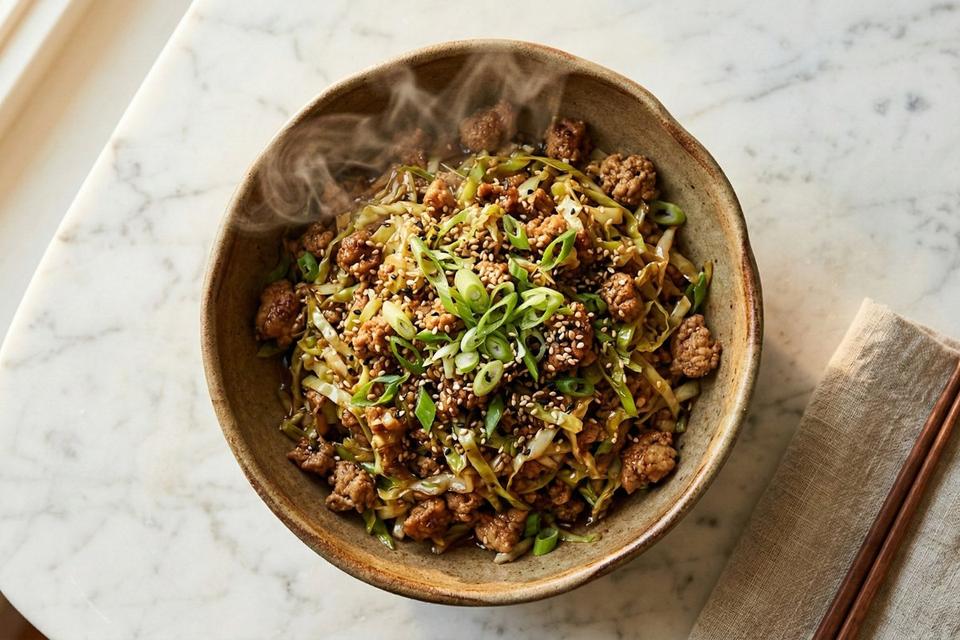
⏱ Time: 15 minutes | 🍽 Servings: 2 | 💪 Protein: 38g per serving
This is the recipe I make more than any other on this list.
The first time I tried it, I ate it standing at the stove because I couldn’t wait to sit down. That was a Thursday night after a long day when I had nothing planned and exactly 15 minutes before I needed to be somewhere else.
It saved me that night. It’s saved me many nights since.
The flavors are deeply savory — soy sauce, sesame, ginger, garlic — with cabbage that absorbs everything and stays just slightly crunchy. The kind of meal that tastes like it took an hour but actually took fifteen minutes.
Ingredients:
| Ingredient | Amount |
|---|---|
| Ground turkey (93% lean) | 1 lb |
| Green cabbage, shredded | 3 cups |
| Garlic cloves, minced | 3 |
| Fresh ginger, grated | 1 tsp |
| Soy sauce | 3 tbsp |
| Sesame oil | 1 tbsp |
| Rice vinegar | 1 tbsp |
| Sriracha (optional) | 1–2 tsp |
| Green onions, sliced | 3 stalks |
| Sesame seeds | 1 tsp |
Instructions:
Step 1 — Cook the turkey. Place a large skillet or wok over medium-high heat. Add ground turkey. Break it apart with a wooden spoon as it cooks. Don’t rush this step — let it actually brown, not just turn gray. Browned meat has more flavor. Cook 6–8 minutes until fully cooked with no pink. Drain any excess liquid.
Step 2 — Add aromatics. Push the turkey to one side. Add garlic and ginger to the empty side. Let them sizzle for 60 seconds, stirring constantly. Your kitchen will smell incredible. Then mix everything together.
Step 3 — Add the cabbage. Add shredded cabbage. Stir everything together. Cook 3–4 minutes, tossing frequently. You want the cabbage soft but not mushy — it should still have a little bite. That texture contrast is what makes this dish.
Step 4 — Season. Add soy sauce, sesame oil, rice vinegar, and sriracha. Stir to coat every piece. Cook 1 more minute. Taste it. Adjust soy sauce or sriracha as needed.
Step 5 — Serve. Divide into bowls. Top with green onions and sesame seeds. Eat immediately — this is best hot.
A few things I’ve learned:
- Shred the cabbage thin. Thick chunks take longer to cook and don’t absorb the sauce as well.
- Don’t skip the rice vinegar. It adds brightness that balances the soy sauce.
- Double the batch on Sunday. It reheats perfectly for 4 days and tastes even better the next day.
- Add a fried egg on top if you want an extra 6g protein and a richer bowl.
- Between meals? These high protein healthy snacks pair perfectly with this style of eating.
Recipe 2: Stuffed Cabbage Rolls with Lean Beef
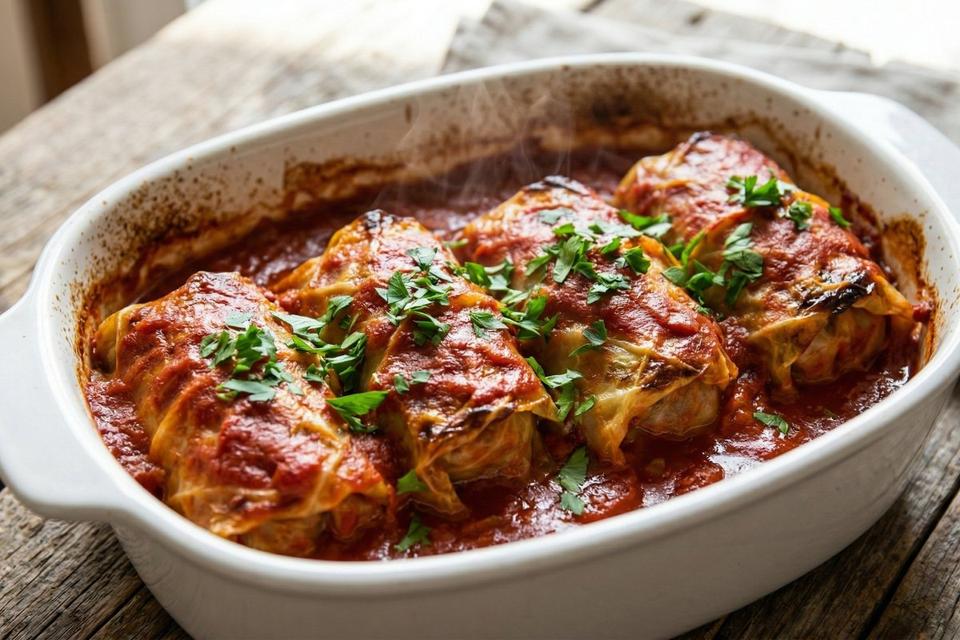
⏱ Time: 70 minutes | 🍽 Servings: 4 | 💪 Protein: 42g per serving
Stuffed cabbage rolls are not a weeknight recipe. Let me be honest about that upfront.
They take time. There’s blanching and rolling and baking involved. You will need a full hour.
But here’s the thing — when you pull these out of the oven and cut into one, the smell alone makes every minute worth it. The tomato sauce bubbling around the rolls, the beef and rice filling that’s absorbed all those flavors — it’s the kind of meal that makes people ask if you’ve been cooking all day.
I make a double batch every few weeks and freeze half. Best decision I ever made for busy weeks.
Ingredients:
| Ingredient | Amount |
|---|---|
| Large cabbage leaves | 8–10 |
| Lean ground beef (90%) | 1 lb |
| Cooked brown rice | 1 cup |
| Onion, finely diced | 1 medium |
| Garlic cloves, minced | 3 |
| Egg | 1 large |
| Diced tomatoes (canned) | 1 can (14 oz) |
| Tomato sauce | 1 cup |
| Paprika | 1 tsp |
| Salt and black pepper | To taste |
| Fresh parsley | For garnish |
Instructions:
Step 1 — Soften the cabbage leaves. Fill a large pot with water and bring to a boil. Carefully peel 8–10 outer leaves from the cabbage — the larger and more intact the better. Lower them into the boiling water for 2–3 minutes until they’re pliable and bend without cracking. Remove and lay flat on a clean kitchen towel to dry. Don’t skip this step — stiff leaves crack when you try to roll them.
Step 2 — Make the filling. In a large mixing bowl, combine ground beef, cooked rice, onion, garlic, egg, paprika, salt, and pepper. Mix with your hands until everything is evenly combined. Don’t over-mix — working the meat too much makes it tough when cooked.
Step 3 — Roll. This is easier than it sounds. Lay a leaf flat. Place 2–3 tablespoons of filling near the base. Fold the bottom up over the filling. Fold in the sides like an envelope. Roll upward to close. Place seam-side down in a baking dish. Repeat until all filling is used.
Step 4 — Add the sauce. Mix diced tomatoes and tomato sauce. Pour evenly over the rolls. Every roll should be partially covered — the sauce steams the rolls from below while they bake.
Step 5 — Bake. Cover tightly with foil. Bake at 375°F (190°C) for 45 minutes. Remove foil for the final 10 minutes to allow the tops to develop a little color.
Step 6 — Rest. Let them sit 5 minutes before serving. This matters — they hold together better when they’ve rested slightly.
Honest notes from my kitchen:
- If leaves tear, just overlap two smaller leaves. The rolls still work and nobody will know.
- These freeze beautifully for up to 3 months. I freeze them in pairs with sauce.
- The flavor is significantly better on day two. I now make these specifically to eat the next day.
- A spoonful of Greek yogurt on top when serving adds creaminess and extra protein.
- If you need more no-fuss lunch ideas: no-cook high protein lunches for days when you don’t want to cook at all.
Recipe 3: High Protein Cabbage Soup
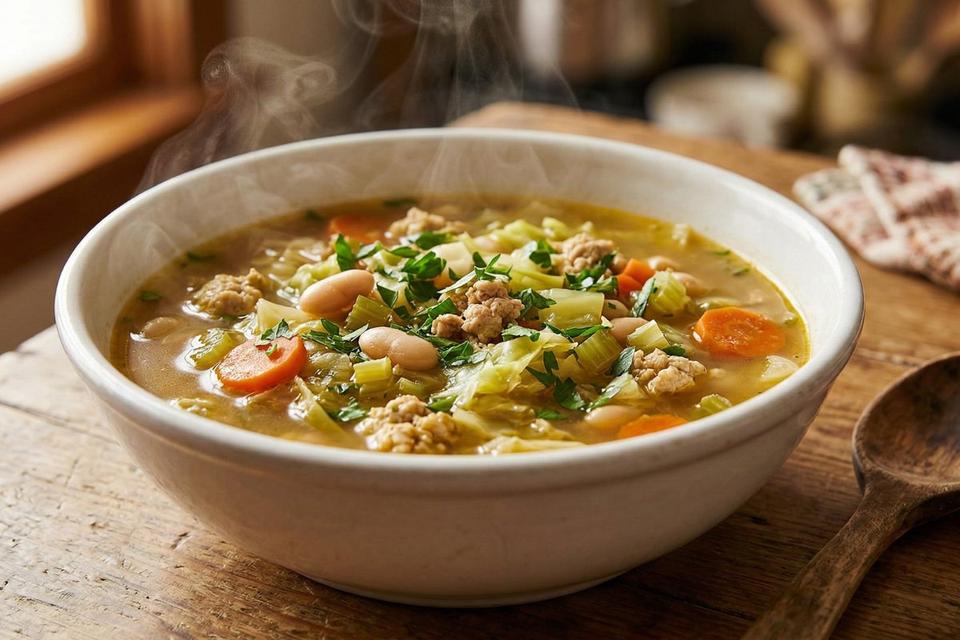
⏱ Time: 40 minutes | 🍽 Servings: 6 | 💪 Protein: 28g per serving
I need to address something before we get into this recipe.
The original “cabbage soup diet” recipe is designed to leave you hungry. It’s basically flavored water with cabbage floating in it. People lose weight on it because they’re not eating enough to sustain themselves.
This is not that.
This soup has ground chicken, white beans, and real vegetables. It’s filling the way a proper meal should be filling. The white beans are the key — most cabbage soups skip them entirely, which is why most cabbage soups don’t keep you full.
I’ve made this soup on cold Sunday afternoons and had it for lunch Monday, Tuesday, and Wednesday. Every time it was better than the day before.
Ingredients:
| Ingredient | Amount |
|---|---|
| Ground chicken or turkey | 1 lb |
| Green cabbage, roughly chopped | 1 small head |
| White beans (canned, drained) | 1 can (15 oz) |
| Chicken broth (low sodium) | 4 cups |
| Diced tomatoes (canned) | 1 can (14 oz) |
| Carrots, sliced | 2 medium |
| Celery stalks, chopped | 3 |
| Onion, diced | 1 large |
| Garlic cloves, minced | 4 |
| Italian seasoning | 2 tsp |
| Salt and pepper | To taste |
| Parmesan rind (optional but worth it) | 1 piece |
| Fresh parsley | For serving |
Instructions:
Step 1 — Brown the meat. Heat a large pot or Dutch oven over medium-high heat. Add ground chicken or turkey. Cook, breaking apart, until fully browned — 6–8 minutes. Remove and set aside. Leave the drippings in the pot. Those drippings carry flavor you don’t want to lose.
Step 2 — Build the base. Same pot. Add onion, carrots, and celery. Cook 5 minutes over medium heat until softened. Add garlic and cook 1 more minute. The kitchen should smell good by now.
Step 3 — Add everything. Pour in broth and tomatoes. Add white beans. If you have a Parmesan rind in your freezer — and I always keep them there — add it now. It dissolves slowly and adds a depth of flavor that’s hard to explain but impossible to miss. Bring to a boil.
Step 4 — Add cabbage and meat. Return the cooked meat to the pot. Add chopped cabbage and Italian seasoning. Stir. Reduce heat to medium-low.
Step 5 — Simmer. Cover and simmer 20–25 minutes. The cabbage will become completely tender and the flavors will come together. Taste. Adjust salt and pepper. Remove the Parmesan rind if it hasn’t fully dissolved.
Step 6 — Serve. Ladle into bowls. Top with fresh parsley and a sprinkle of Parmesan.
What I’ve learned:
- This soup thickens overnight as the beans absorb liquid. Add a splash of broth when reheating.
- Sunday soup = best Monday lunch. Plan for it.
- Swap white beans for chickpeas if that’s what you have. Both work beautifully.
- For more batch cooking ideas: High Protein Meal Prep for Weight Loss | High Protein Dinner Meal Prep
Recipe 4: Egg and Cabbage Scramble
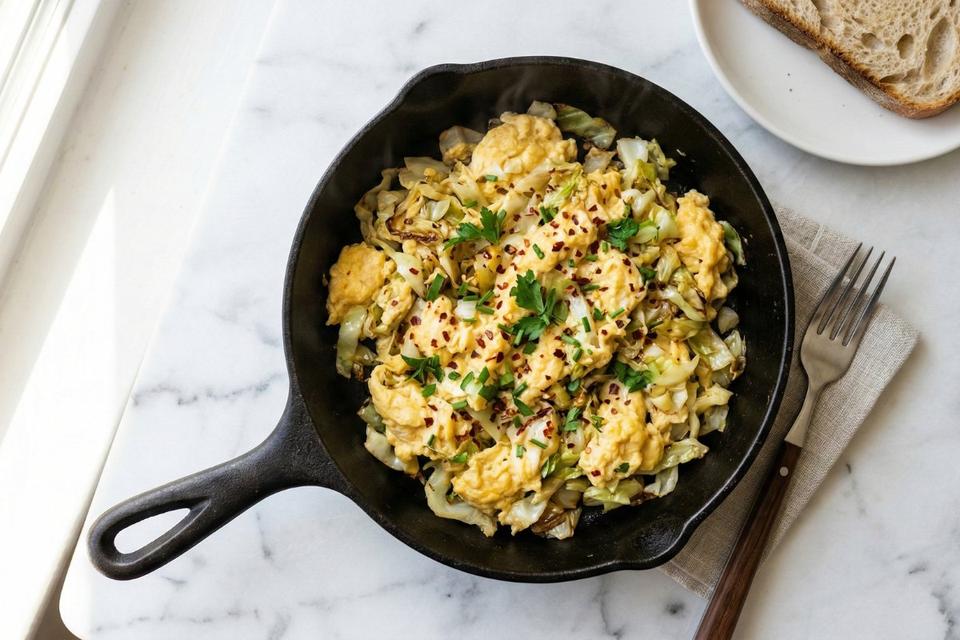
⏱ Time: 8 minutes | 🍽 Servings: 1 | 💪 Protein: 24g per serving
This is my emergency breakfast.
The kind of morning where I woke up late, have nothing prepped, and need real food before I can function. Three eggs, some cabbage, cottage cheese mixed in — eight minutes and I have 24 grams of protein before I’ve fully woken up.
The cottage cheese sounds strange. I thought so too the first time. But it melts into the eggs and creates a creaminess that you wouldn’t get otherwise. It also adds 6 extra grams of protein without changing the flavor.
Try it once. You’ll keep doing it.
Ingredients:
| Ingredient | Amount |
|---|---|
| Large eggs | 3 |
| Shredded green cabbage | 1.5 cups |
| Cottage cheese | 2 tbsp |
| Garlic clove, minced | 1 |
| Olive oil | 1 tsp |
| Red pepper flakes | 1/4 tsp |
| Salt and black pepper | To taste |
| Hot sauce | Optional |
Instructions:
Step 1 — Start the cabbage. Heat olive oil in a non-stick skillet over medium heat. Add garlic. Let it sizzle 30 seconds. Add shredded cabbage with a pinch of salt. Cook 2–3 minutes, stirring, until the cabbage softens slightly and you see a few golden edges.
Step 2 — Prepare the eggs. While the cabbage cooks, crack eggs into a bowl. Add cottage cheese, salt, pepper, and red pepper flakes. Whisk until combined. It’ll look lumpy from the cottage cheese — that’s fine. It smooths out when it hits the heat.
Step 3 — Scramble slowly. Pour the egg mixture over the cabbage. Turn the heat to medium-low. Use a spatula to slowly fold from the outside toward the center. Don’t rush. Don’t stir constantly. Low and slow is the difference between silky and rubbery. Pull the pan off heat when the eggs still look slightly wet — they finish from residual heat.
Step 4 — Eat immediately. Slide onto a plate. Add hot sauce. Eat.
Notes:
- Seriously — don’t rush the eggs. It’s 2 extra minutes and it matters.
- This works with any vegetables you have. Leftover roasted peppers, spinach, mushrooms — all great.
- If eggs aren’t your thing in the morning: high protein breakfast no eggs has everything you need.
Recipe 5: Korean-Inspired Cabbage Protein Bowl
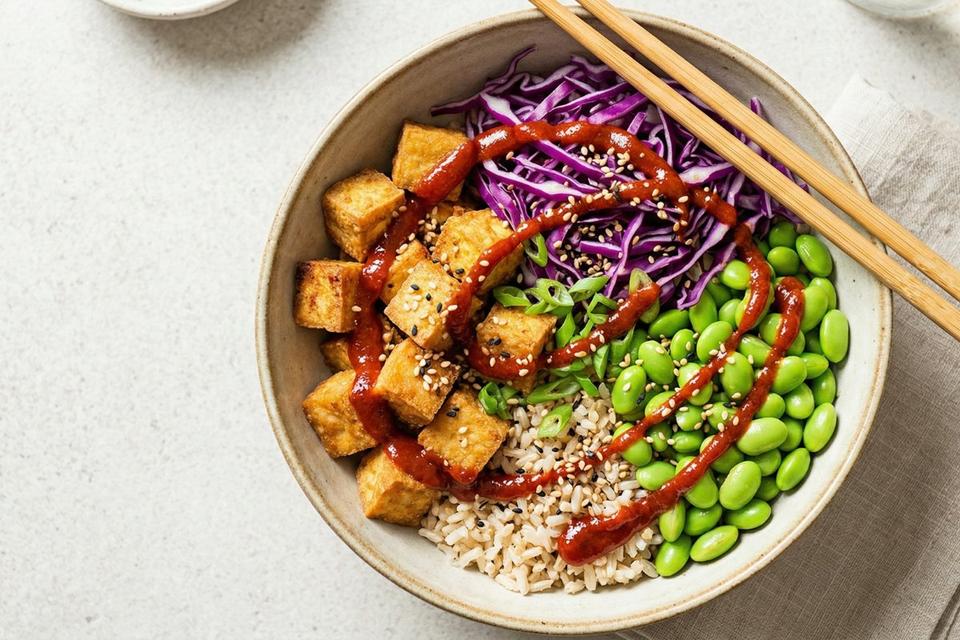
⏱ Time: 25 minutes | 🍽 Servings: 2 | 💪 Protein: 35g per serving
The first time I made gochujang sauce, I put it on everything for two weeks.
Eggs. Rice. Roasted vegetables. My fingers, accidentally, while tasting it from the spoon.
It’s that good. Spicy, slightly sweet, deeply savory — and it transforms this bowl from a healthy meal into something that tastes like it came from a restaurant.
The red cabbage here isn’t just for color. It holds up better than green cabbage when eaten raw, and it has more antioxidants. A small detail that makes a real difference.
Ingredients:
For the bowl:
| Ingredient | Amount |
|---|---|
| Firm tofu, pressed | 8 oz |
| Red cabbage, shredded | 2 cups |
| Edamame, shelled | 1 cup |
| Brown rice, cooked | 1 cup |
| Sesame oil | 1 tbsp |
| Sesame seeds | For garnish |
For the gochujang sauce:
| Ingredient | Amount |
|---|---|
| Gochujang paste | 2 tbsp |
| Soy sauce | 2 tbsp |
| Rice vinegar | 1 tbsp |
| Honey or maple syrup | 1 tsp |
| Sesame oil | 1 tsp |
| Warm water | 1–2 tbsp |
Instructions:
Step 1 — Press the tofu. This step cannot be skipped. Wrap tofu in a clean kitchen towel. Put something heavy on top — a cast iron pan, a stack of books, whatever you have. Leave it 10–15 minutes. Un-pressed tofu is soft and wet and will not crisp. Pressed tofu crisps beautifully.
Step 2 — Make the sauce. Whisk all sauce ingredients together. Add water one tablespoon at a time until it pours easily but still coats a spoon. Taste it. Adjust spice level with more or less gochujang. Set aside.
Step 3 — Fry the tofu. Cut pressed tofu into 1-inch cubes. Heat sesame oil in a non-stick skillet over medium-high. Add tofu in a single layer. Here’s the important part: don’t touch it for 3–4 minutes. Just let it sit. Patience creates the golden crust. Flip and repeat on other sides until golden all over.
Step 4 — Prepare edamame. Frozen edamame: microwave per package. Fresh: blanch 3–4 minutes in boiling salted water.
Step 5 — Assemble. Divide rice between bowls. Add cabbage, edamame, and tofu. Pour gochujang sauce generously over everything. Toss. Top with sesame seeds.
Notes:
- Gochujang is in most grocery stores now, in the international foods section. It keeps for months in the fridge.
- Add a soft-boiled egg for an extra 6g protein and a richer bowl.
- Want more plant-based protein ideas? High Protein Vegetarian Meals | Vegan Meal Prep Guide
Recipe 6: Cabbage and Salmon Stir-Fry
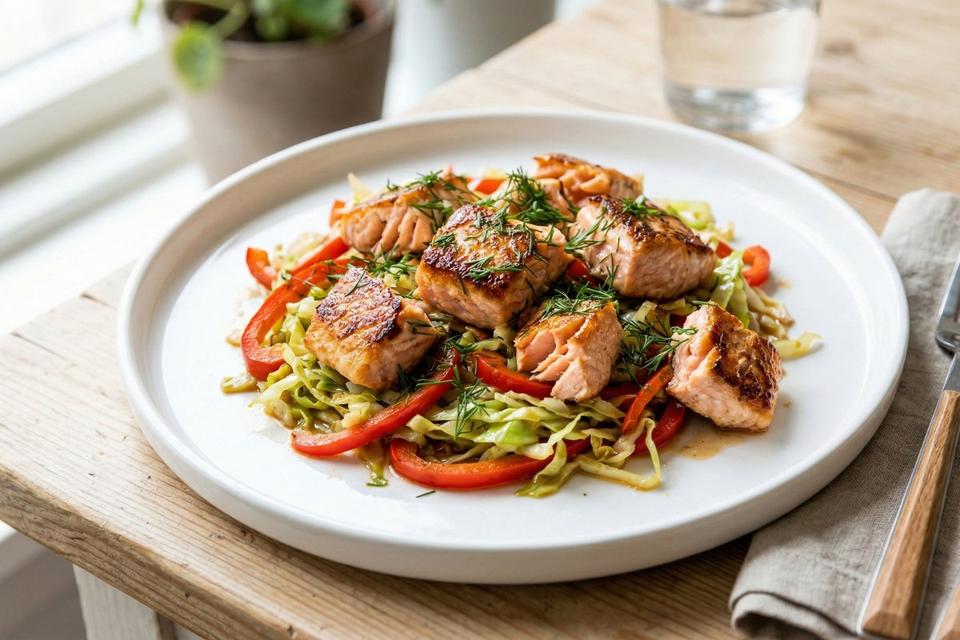
⏱ Time: 20 minutes | 🍽 Servings: 2 | 💪 Protein: 40g per serving
Salmon and cabbage sounds like something a nutritionist would eat while looking out a window.
I know. I had the same reaction.
But this combination surprised me. The salmon — flaked into chunks and folded back into the stir-fried cabbage — soaks up the soy sauce and lemon. The cabbage provides a base that makes the salmon stretch further. And the whole thing comes together in 20 minutes with 40 grams of protein per serving.
It’s also one of the most nutritionally dense meals on this list. Omega-3s from the salmon. Vitamin C and fiber from the cabbage. Real food that works hard.
Ingredients:
| Ingredient | Amount |
|---|---|
| Salmon fillets | 2 (6 oz each) |
| Green cabbage, shredded | 3 cups |
| Red bell pepper, sliced | 1 |
| Garlic cloves, minced | 3 |
| Soy sauce | 2 tbsp |
| Lemon juice | 1 tbsp |
| Olive oil | 1 tbsp |
| Salt and pepper | To taste |
| Fresh dill or parsley | For garnish |
Instructions:
Step 1 — Sear the salmon. Pat the fillets completely dry with paper towels. This is not optional — wet salmon won’t sear, it’ll steam. Season with salt and pepper. Heat olive oil in a large skillet until shimmering. Place salmon skin-side up. Cook without touching for 4 minutes. Flip. Cook 3–4 more minutes. The salmon should flake easily when pressed. Remove and flake into large chunks with a fork.
Step 2 — Stir-fry the vegetables. Same pan. Add garlic and bell pepper. Cook 2 minutes, stirring. Add cabbage. Stir-fry 3–4 minutes over medium-high heat until the cabbage softens but keeps some texture.
Step 3 — Combine. Add soy sauce and lemon juice to the vegetables. Stir. Gently fold salmon back in — you want large pieces, not mush. One or two gentle tosses.
Step 4 — Serve immediately. Plate and finish with fresh dill or parsley.
Notes:
- The moment you can’t resist touching the salmon is the moment you should resist touching it. Let the sear happen.
- Canned salmon is a budget substitute. Skip Step 1 and fold it in at Step 3.
- For more fast dinner ideas: 30 Minute High Protein Dinners | Quick Healthy Dinners for Weight Loss
Recipe 7: High Protein Cabbage Tacos
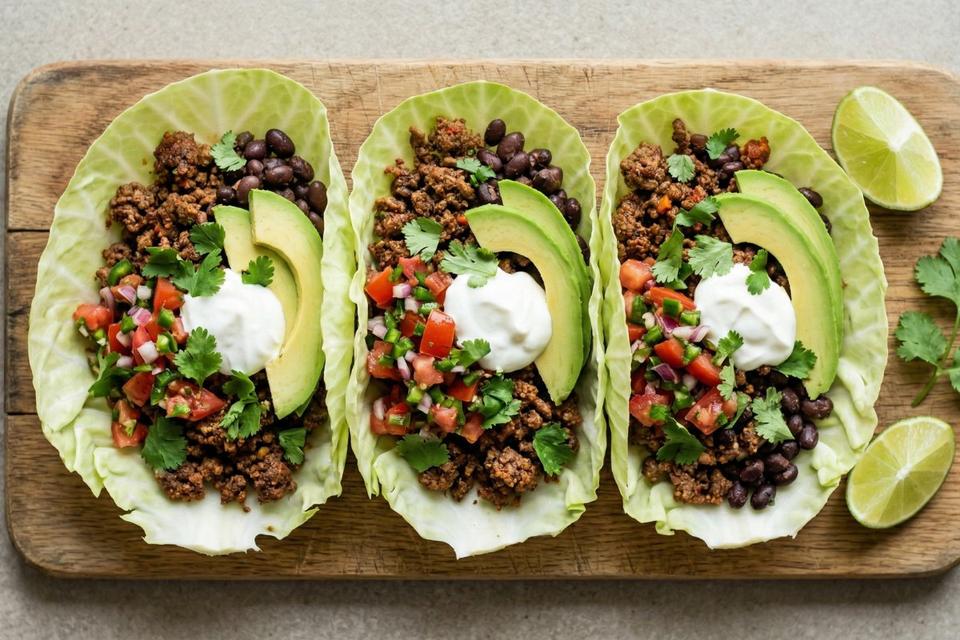
⏱ Time: 20 minutes | 🍽 Servings: 2 | 💪 Protein: 32g per serving
Two ways to do this: use cabbage leaves as the shell, or use regular tortillas and pile cabbage on top as the slaw.
I do both depending on my mood. The cabbage shell version is lighter and lower carb. The tortilla version is more satisfying and filling. Both are high protein. Both are excellent.
The swap that matters most here is Greek yogurt instead of sour cream. It looks identical in the bowl. It tastes nearly identical in the taco. But it adds 8–10 grams of protein that sour cream will never give you.
Ingredients:
For the filling:
| Ingredient | Amount |
|---|---|
| Ground beef or turkey | 8 oz |
| Black beans (canned, drained) | 1/2 cup |
| Cumin | 1 tsp |
| Chili powder | 1 tsp |
| Garlic powder | 1/2 tsp |
| Salt | To taste |
For serving:
| Ingredient | Amount |
|---|---|
| Large cabbage leaves | 8 (as shells) |
| Avocado, sliced | 1/2 |
| Greek yogurt | 1/4 cup |
| Salsa | To taste |
| Lime | 1 |
| Fresh cilantro | Handful |
Instructions:
Step 1 — Cook the meat. Skillet, medium-high heat. Add ground beef or turkey. Break apart as it cooks. Brown fully — 6–8 minutes. Drain fat.
Step 2 — Season. Add cumin, chili powder, garlic powder, salt. Stir to coat. Add black beans. Cook 2 more minutes until beans are warm and starting to slightly crisp at the edges.
Step 3 — Prepare the cabbage shells. Select 8 large outer leaves that cup naturally. Rinse and dry them.
Step 4 — Assemble. Fill each leaf with the meat and bean mixture. Add avocado slices. Spoon salsa over. Add a small dollop of Greek yogurt. Squeeze lime juice. Finish with cilantro.
Notes:
- If leaves are stiff, blanch 30 seconds. They become pliable immediately.
- The lime juice is not optional. It pulls everything together.
- Love chicken? Try lemon garlic chicken meal prep as an alternative filling that works just as well.
Recipe 8: Cabbage and Chickpea Curry
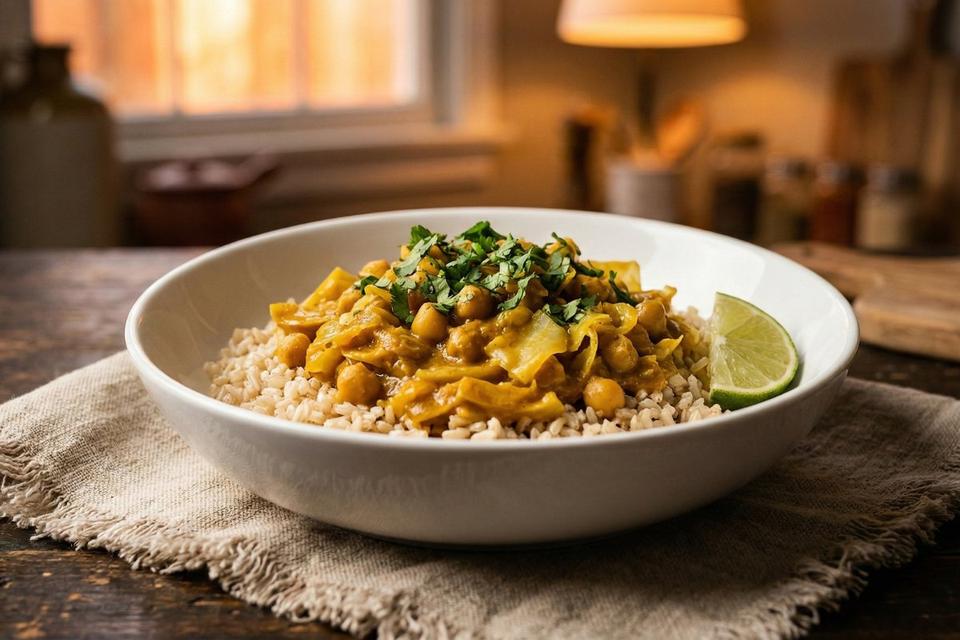
⏱ Time: 35 minutes | 🍽 Servings: 4 | 💪 Protein: 22g per serving (fully plant-based)
There’s a moment in making curry when the spices hit the oil.
Everything in the pot seizes up into a fragrant paste and the kitchen fills with this deep, warm smell — turmeric and cumin and something you can’t quite name. It lasts maybe 60 seconds before you add the liquid.
That 60 seconds is why I make curry.
This one is fully plant-based, surprisingly filling, and significantly better the day after you make it. The spices keep working overnight. I’ve made this on Saturday and eaten the best bowl on Monday.
Ingredients:
| Ingredient | Amount |
|---|---|
| Chickpeas (canned, drained) | 2 cans (15 oz each) |
| Green cabbage, roughly chopped | 4 cups |
| Coconut milk (full fat) | 1 can (14 oz) |
| Diced tomatoes (canned) | 1 can (14 oz) |
| Onion, diced | 1 large |
| Garlic cloves, minced | 4 |
| Fresh ginger, grated | 1 tbsp |
| Curry powder | 2 tsp |
| Turmeric | 1 tsp |
| Cumin | 1 tsp |
| Cayenne | 1/4 tsp |
| Olive oil | 1 tbsp |
| Salt | To taste |
| Fresh cilantro and lime | For serving |
Instructions:
Step 1 — Build the base. Heat olive oil in a large deep skillet or pot over medium. Add onion. Cook 5 minutes until soft. Add garlic and ginger. Cook 1–2 minutes, stirring constantly.
Step 2 — Bloom the spices. Add curry powder, turmeric, cumin, and cayenne directly to the onion mixture. Stir constantly for 60 seconds. The pot will look dry and paste-like. That’s correct. This step is called “blooming” and it transforms raw spice flavor into something deep and complex. Don’t rush it. Don’t skip it.
Step 3 — Add liquids. Pour in tomatoes and coconut milk. Stir to dissolve the spice paste into the liquid. Bring to a gentle simmer.
Step 4 — Add chickpeas. Add drained chickpeas. Stir. Simmer uncovered 10 minutes.
Step 5 — Add cabbage. Add chopped cabbage. Stir to coat. Cover and cook 8–10 minutes until completely tender and deeply flavored.
Step 6 — Finish. Taste. Add salt. Serve over rice with cilantro and a lime wedge.
Notes:
- Full fat coconut milk only. Light coconut milk makes a thin, watery sauce. Not the same thing.
- Spinach in the final 2 minutes adds nutrients and a beautiful color.
- For more anti-inflammatory meal ideas: anti-inflammatory recipes
Recipe 9: Shrimp and Cabbage Bowl
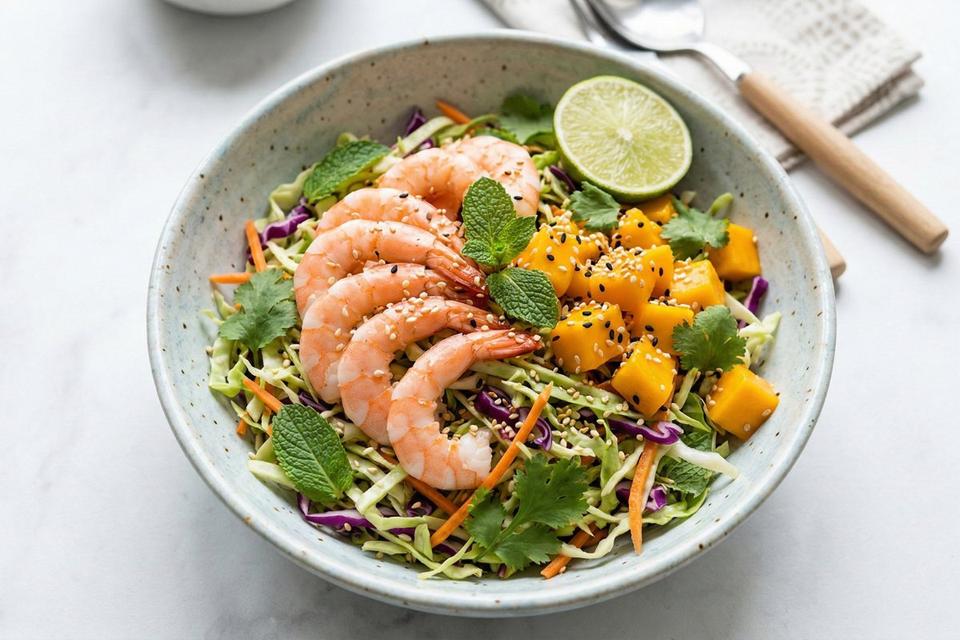
⏱ Time: 20 minutes | 🍽 Servings: 2 | 💪 Protein: 30g per serving
Shrimp is criminally underused in home cooking.
Three ounces delivers 20 grams of protein for only 85 calories. It cooks in literally 4 minutes. It takes on whatever flavor you cook it with. And yet somehow it feels like a special occasion ingredient that people save for restaurants.
This bowl is my argument for cooking shrimp at home every week. The cabbage slaw underneath — dressed with lime, soy, and sesame — is bright and crunchy. The shrimp on top is warm and slightly charred. Together they’re better than most things I’ve ordered at a restaurant.
Ingredients:
| Ingredient | Amount |
|---|---|
| Shrimp, peeled and deveined | 12 oz |
| Green cabbage, shredded | 2 cups |
| Red cabbage, shredded | 1 cup |
| Mango, diced | 1/2 (optional but amazing) |
| Lime juice | From 2 limes |
| Soy sauce | 1 tbsp |
| Sesame oil | 1 tsp |
| Garlic clove, minced | 1 |
| Red chili or pepper flakes | To taste |
| Fresh cilantro and mint | Generous handful |
| Sesame seeds | For garnish |
Instructions:
Step 1 — Make the slaw. Combine green and red cabbage in a bowl. Add lime juice, soy sauce, a pinch of salt. Toss. Let it sit 5–10 minutes. The lime juice lightly softens the cabbage and the flavor develops while you cook the shrimp. Add mango if using.
Step 2 — Cook the shrimp. Heat a tiny drizzle of oil in a skillet over medium-high. Add garlic — 20 seconds. Add shrimp in a single layer. Two minutes without touching. Flip. One to two more minutes until pink and curled into a C shape. Season with salt and chili. Remove immediately.
Step 3 — Assemble and serve. Divide slaw between bowls. Arrange shrimp on top. Add cilantro and mint generously — they’re not decoration here, they’re part of the flavor. Sesame seeds on top.
Notes:
- Shrimp go from perfect to overcooked in about 30 seconds. Watch them carefully and pull them off heat the moment they curl.
- Frozen shrimp works perfectly. Thaw under cold running water for 5 minutes.
- The mango adds sweetness that makes this bowl feel tropical and fresh. Don’t skip it if you have one.
Recipe 10: Lentil and Cabbage Soup
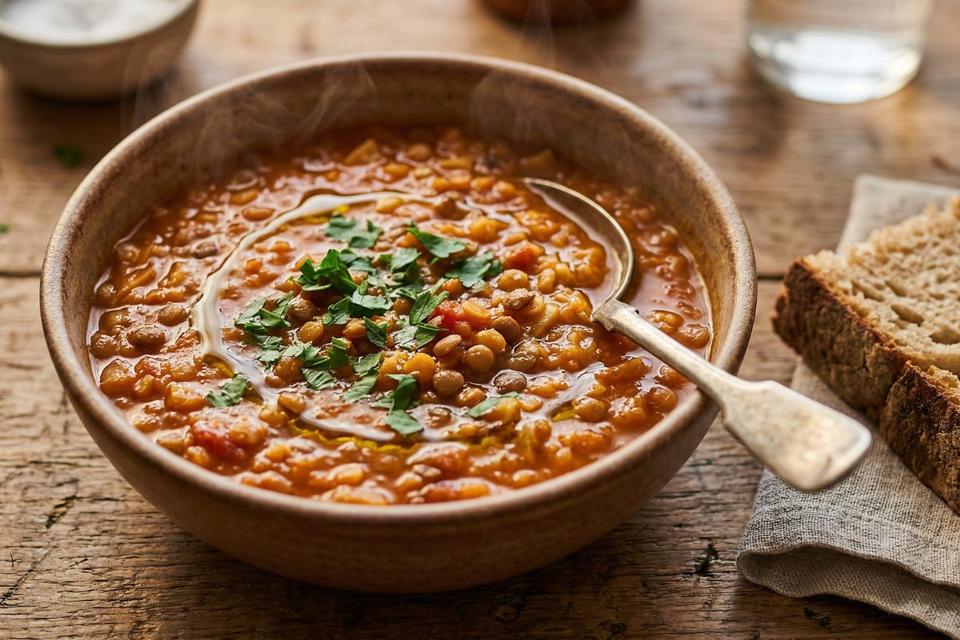
⏱ Time: 45 minutes | 🍽 Servings: 6 | 💪 Protein: 26g per serving (fully plant-based)
I want to tell you something about lentils that took me too long to learn.
They don’t need to soak. They don’t need hours of cooking. One cup of cooked lentils has 18 grams of protein, they cook in 20 minutes, and they create a texture in soup that’s genuinely satisfying in a way that most plant-based meals aren’t.
This soup is my go-to for cold days and busy weeks. The smoked paprika and lemon finish make it taste like something that required far more effort than it did.
Ingredients:
| Ingredient | Amount |
|---|---|
| Green or brown lentils, rinsed | 1.5 cups |
| Green cabbage, shredded | 4 cups |
| Vegetable broth | 6 cups |
| Diced tomatoes (canned) | 1 can (14 oz) |
| Onion, diced | 1 large |
| Garlic cloves, minced | 4 |
| Carrots, sliced | 2 medium |
| Cumin | 2 tsp |
| Smoked paprika | 1 tsp |
| Turmeric | 1/2 tsp |
| Olive oil | 1 tbsp |
| Lemon juice | From 1 lemon |
| Salt and pepper | To taste |
| Fresh parsley | For serving |
Instructions:
Step 1 — Sauté. Heat olive oil in a large pot. Add onion and carrots. Cook 5 minutes. Add garlic, cumin, smoked paprika, turmeric. Cook 1 minute, stirring — that bloom again. Worth it every time.
Step 2 — Add lentils and broth. Add rinsed lentils, broth, and tomatoes. Stir. Bring to a boil, then reduce to a steady simmer.
Step 3 — Cook lentils. Simmer uncovered 20 minutes until lentils are nearly tender.
Step 4 — Add cabbage. Add shredded cabbage. Stir to submerge. Cover and cook 10 more minutes.
Step 5 — Finish. Squeeze the whole lemon into the soup. This single step brightens every flavor in the pot. Taste and adjust salt and pepper. Serve with parsley on top.
Notes:
- Red lentils cook faster (15 minutes) and create a creamier, thicker texture. Both work.
- The lemon juice is not optional. Add it. Trust me.
- More plant-based meal prep ideas: Vegan Meal Prep Guide | High Protein Low Calorie Meal Prep
Recipe 11: Beef and Cabbage Stir-Fry
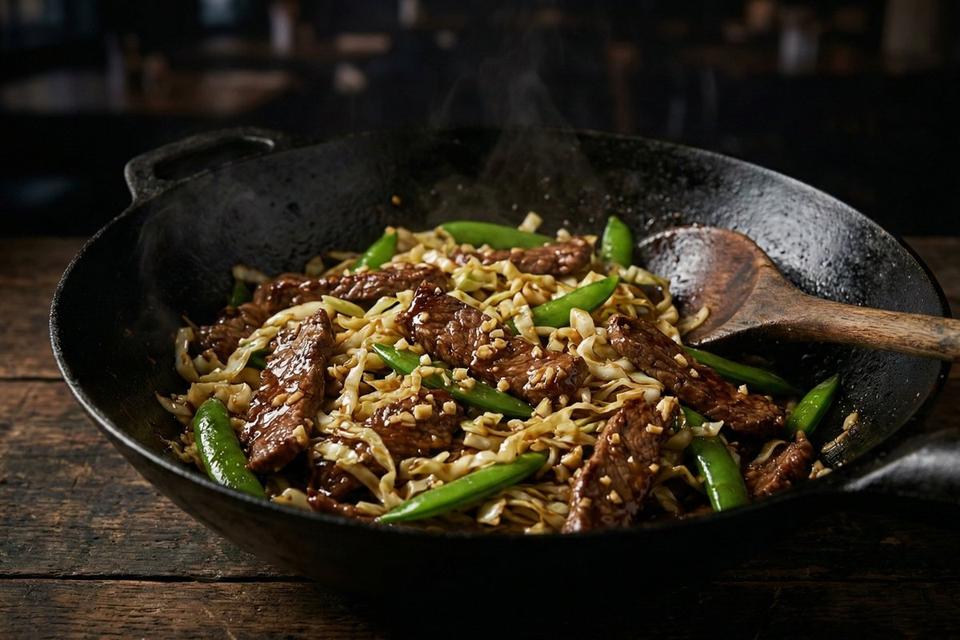
⏱ Time: 20 minutes | 🍽 Servings: 2 | 💪 Protein: 36g per serving
Everything I said about Recipe 1 applies here — except this version uses beef and a slightly deeper sauce with oyster sauce added.
The key to this recipe is high heat and not overcrowding the pan. Beef needs space to sear. If you crowd it, it steams instead of browns and you lose all that flavor. Cook in batches if your pan isn’t large enough.
Ingredients:
| Ingredient | Amount |
|---|---|
| Flank or sirloin steak, thinly sliced | 8 oz |
| Green cabbage, shredded | 3 cups |
| Snap peas | 1 cup |
| Garlic cloves, minced | 3 |
| Soy sauce | 3 tbsp |
| Oyster sauce | 1 tbsp |
| Cornstarch | 1 tsp |
| Sesame oil | 1 tsp |
| Vegetable oil | 1 tbsp |
Instructions:
Step 1 — Marinate briefly. Slice beef as thin as possible — partially freezing it for 20 minutes makes this much easier. Combine with 2 tbsp soy sauce and cornstarch. Toss. Marinate 10 minutes minimum.
Step 2 — Sear the beef. Heat vegetable oil in a wok or large skillet over high heat until nearly smoking. Add beef in a single layer. Don’t stir for 60–90 seconds. Let it sear. Then stir and cook 30 more seconds. Remove from pan.
Step 3 — Stir-fry vegetables. Same pan. Add garlic — 30 seconds. Add snap peas and cabbage. Stir-fry over high heat 3–4 minutes, tossing constantly.
Step 4 — Combine. Return beef. Add remaining soy sauce, oyster sauce, sesame oil. Toss 1 minute.
Step 5 — Serve immediately. Stir-fry waits for no one.
Recipe 12: Cottage Cheese Cabbage Bowl
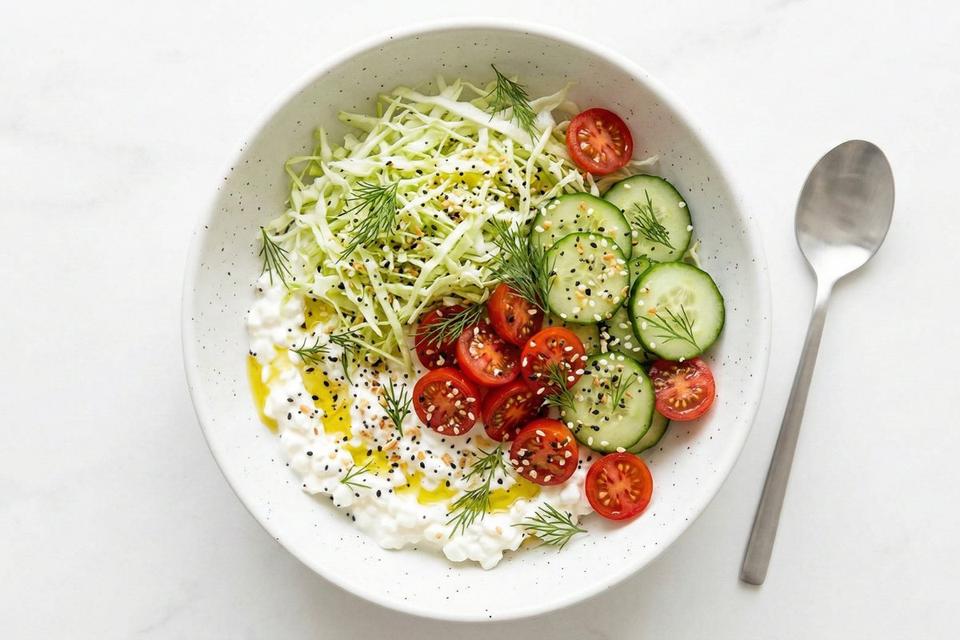
⏱ Time: 10 minutes | 🍽 Servings: 1 | 💪 Protein: 28g per serving
I know what you’re thinking.
Cottage cheese and cabbage together sounds like something you eat when you’ve run out of real food.
I thought the same thing. I was wrong.
The cottage cheese acts as a creamy base — like a thick, protein-packed dressing that coats every strand of cabbage. Add apple cider vinegar for brightness, everything bagel seasoning for crunch and complexity, fresh herbs — and suddenly you have something that’s genuinely craveable.
This is also one of the most blood-sugar-friendly meals on this list. The protein and fiber combination is excellent for stable energy throughout the afternoon.
Ingredients:
| Ingredient | Amount |
|---|---|
| Cottage cheese (2% or full fat) | 1 cup |
| Green cabbage, finely shredded | 2 cups |
| Cucumber, thinly sliced | 1/2 |
| Cherry tomatoes, halved | 8–10 |
| Apple cider vinegar | 1 tbsp |
| Olive oil | 1 tbsp |
| Everything bagel seasoning | 1 tsp |
| Fresh dill or parsley | Handful |
| Salt and pepper | To taste |
Instructions:
Step 1 — Dress the cabbage. Place cabbage in a bowl. Add vinegar, olive oil, salt, pepper. Massage lightly with your hands for 30 seconds. It softens the texture and deepens the flavor.
Step 2 — Assemble. Spoon cottage cheese into a wide bowl. Pile dressed cabbage on top. Arrange cucumber and tomatoes around the edges.
Step 3 — Season. Sprinkle everything bagel seasoning generously. Add fresh herbs. Serve immediately.
Notes:
- Small-curd cottage cheese distributes more evenly than large-curd.
- Perfect for blood sugar management — the protein and fiber prevent glucose spikes. More ideas: Blood Sugar Balancing Breakfast Recipes | High Fiber Breakfast Recipes | Low Calorie Breakfast Ideas
Recipe 13: Unstuffed Cabbage Roll Bowl
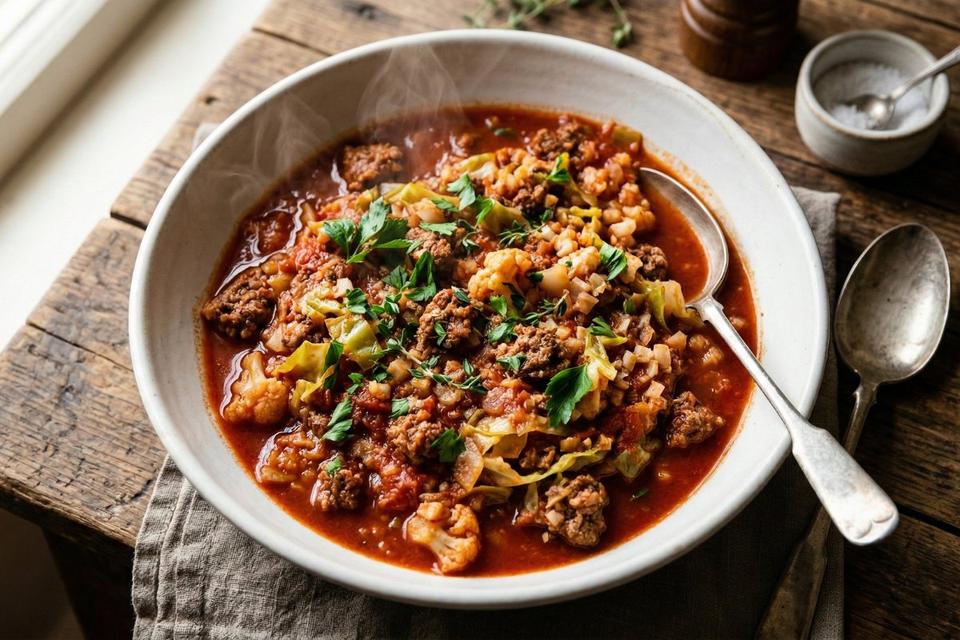
⏱ Time: 30 minutes | 🍽 Servings: 4 | 💪 Protein: 40g per serving
All the flavor of Recipe 2. None of the rolling.
I love stuffed cabbage rolls. I also don’t always have an hour and the patience to roll eight individual rolls. This version solves that problem.
Everything goes into one pot. The cabbage is chopped instead of whole. The filling is mixed in instead of contained. The result tastes almost identical and takes half the time.
My lazy weeknight solution for when I want comfort food but not the full process.
Ingredients:
| Ingredient | Amount |
|---|---|
| Lean ground beef (90%) | 1 lb |
| Green cabbage, roughly chopped | 1 small head |
| Cauliflower rice | 1 cup |
| Diced tomatoes (canned) | 1 can (14 oz) |
| Tomato paste | 2 tbsp |
| Onion, diced | 1 |
| Garlic cloves, minced | 3 |
| Paprika | 1 tsp |
| Italian seasoning | 1 tsp |
| Salt and pepper | To taste |
| Fresh parsley | For serving |
Instructions:
Step 1 — Brown the beef. Large pot, medium-high. Cook beef until fully browned. Drain fat.
Step 2 — Build flavor. Add onion and garlic. Cook 3 minutes. Add tomato paste. Stir and cook 1 minute until the paste darkens — this step reduces bitterness and deepens the tomato flavor significantly.
Step 3 — Add everything else. Add tomatoes, cauliflower rice, paprika, Italian seasoning. Stir. Add chopped cabbage on top.
Step 4 — Cook through. Cover. Medium heat. Cook 15–20 minutes, stirring every 5 minutes, until cabbage is completely tender and has absorbed the sauce.
Step 5 — Serve. Top with fresh parsley.
Recipe 14: Cabbage and Tuna Protein Salad
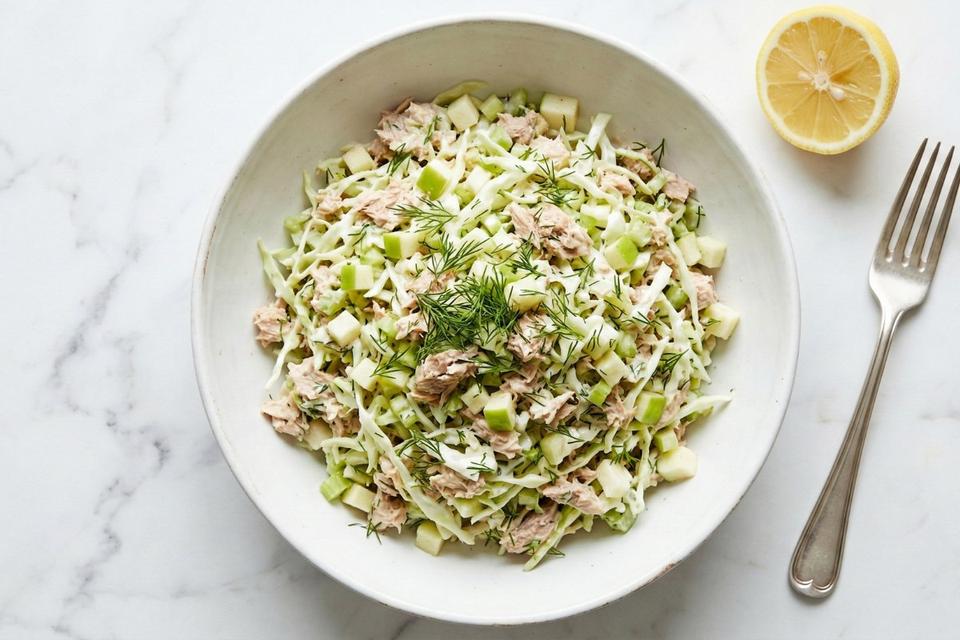
⏱ Time: 10 minutes | 🍽 Servings: 2 | 💪 Protein: 34g per serving
Some days you cannot cook. The stove feels like a personal enemy.
On those days, this salad exists.
Two cans of tuna. Some cabbage. Greek yogurt instead of mayo. An apple for sweetness that surprises you every time. Ten minutes and 34 grams of protein.
It also gets better in the fridge overnight, which means it’s the ideal prep-ahead lunch for days when you know you’ll have zero energy by noon.
Ingredients:
| Ingredient | Amount |
|---|---|
| Canned tuna in water, drained | 2 cans (5 oz each) |
| Green cabbage, finely shredded | 3 cups |
| Apple, diced | 1 small |
| Celery stalks, diced | 2 |
| Red onion, finely diced | 1/4 |
| Greek yogurt | 3 tbsp |
| Dijon mustard | 1 tbsp |
| Lemon juice | From 1 lemon |
| Fresh dill | 2 tbsp |
| Salt and pepper | To taste |
Instructions:
Step 1 — Make the dressing. Mix Greek yogurt, Dijon, lemon juice, dill, salt, pepper in a large bowl until smooth.
Step 2 — Add tuna. Add drained tuna. Fold in gently — keep some larger chunks. Don’t over-mix.
Step 3 — Add everything else. Add cabbage, apple, celery, red onion. Toss until evenly coated.
Step 4 — Serve or refrigerate. Eat immediately or refrigerate up to 2 days. Many people (including me) prefer it the next day.
Notes:
- The apple is essential. It balances the savory tuna in a way nothing else does.
- Serve in cabbage leaf cups for a presentation that impresses people for zero extra effort.
- More no-cook ideas: No Cook Chickpea Salad Recipes | Tuna Avocado Salad No Mayo | No Cook High Protein Lunches
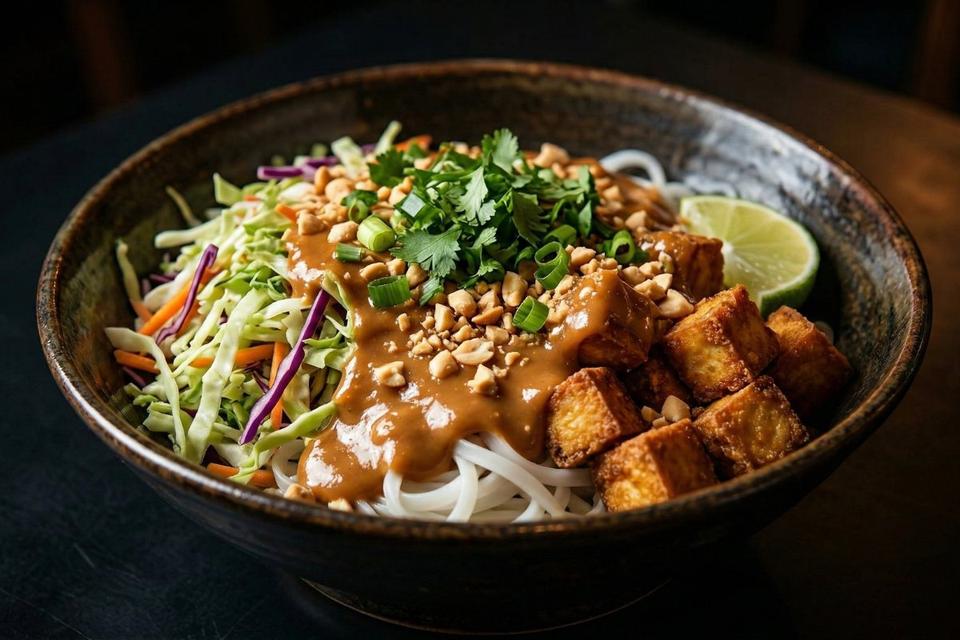
Recipe 15: Spicy Peanut Cabbage Noodle Bowl
⏱ Time: 25 minutes | 🍽 Servings: 2 | 💪 Protein: 29g per serving
This is the recipe that surprises people most.
Every time I serve it, someone asks for the recipe. Not because it looks impressive — it doesn’t, particularly. But because it tastes like restaurant takeout. The peanut sauce is the reason.
Nutty, spicy, slightly sweet, tangy. It coats the noodles and cabbage in a way that makes every bite different from the last. I’ve made this sauce and immediately put it on leftovers from other recipes just to use it up.
Ingredients:
For the bowl:
| Ingredient | Amount |
|---|---|
| Firm tofu, pressed | 6 oz |
| Green cabbage, shredded | 3 cups |
| Edamame pasta or rice noodles | 2 portions |
| Sesame oil | 1 tbsp |
| Green onions, sliced | 2 |
| Crushed peanuts | 2 tbsp |
| Fresh cilantro | Handful |
| Lime wedges | For serving |
For the peanut sauce:
| Ingredient | Amount |
|---|---|
| Natural peanut butter | 3 tbsp |
| Soy sauce | 2 tbsp |
| Rice vinegar | 1 tbsp |
| Sriracha | 1–2 tsp |
| Sesame oil | 1 tsp |
| Honey or maple syrup | 1 tsp |
| Warm water | 2–3 tbsp |
Instructions:
Step 1 — Make the sauce first. Whisk everything together. Add warm water until it pours easily. Taste. Adjust heat. Set aside and try not to eat it all with a spoon.
Step 2 — Cook noodles. Cook per package instructions. Drain. Toss immediately with a drop of sesame oil to prevent sticking.
Step 3 — Fry tofu. Pressed tofu, cut into cubes. Sesame oil, medium-high heat. Single layer. Don’t touch for 3–4 minutes. Golden crust. Flip. Repeat.
Step 4 — Assemble. Noodles in bowl. Cabbage on top. Tofu on top of that. Peanut sauce over everything. Toss.
Step 5 — Finish. Green onions, crushed peanuts, cilantro. Lime wedge on the side. Squeeze it over before eating.
Notes:
- The peanut sauce keeps in the fridge for a week. Make a double batch. Use it on everything.
- Edamame pasta adds significant extra protein over regular rice noodles.
Meal Prep Guide for These Recipes
Cabbage is one of the best meal prep vegetables — and most people don’t use it this way.
Shred a whole head on Sunday. It takes 10 minutes. Store in an airtight container. It stays crisp for 5 full days. Every recipe above becomes dramatically faster when the cabbage is already done.
Pre-cook your protein. Ground turkey, ground beef, and hard-boiled eggs all keep 4–5 days in the fridge. Cook them in bulk and combine with fresh cabbage throughout the week.
Make soups specifically ahead. Recipes 3 and 10 taste better on day two and three. The flavors develop overnight. Make them on purpose in advance.
Freeze the rolls. Recipe 2 freezes for up to 3 months. I freeze them in pairs with sauce. Future-me is always grateful.
Dress salads last. For Recipe 14, keep the dressing separate if prepping ahead. Dress just before eating.
For a complete weekly system: High Protein Meal Prep for Weight Loss | High Protein Low Calorie Meal Prep | High Protein Dinner Meal Prep
What Cabbage Actually Does for Your Body
Beyond being the perfect protein base, cabbage is doing real nutritional work.
The fiber slows digestion and stabilizes blood sugar after meals — especially important if you’re eating high protein for weight management. For morning meals that do the same thing, these blood sugar balancing breakfast recipes and high fiber breakfast recipes follow the same principle.
Cabbage also contains sulforaphane — a compound studied for anti-inflammatory effects. Research published through the NIH links cruciferous vegetables like cabbage to meaningful improvements in gut microbiome diversity. And Harvard Health consistently places them among the most beneficial vegetables for long-term health.
One cup of cabbage also provides around 54% of your daily Vitamin C — more than most people expect from a leafy vegetable.
Common Questions
Does cabbage itself have enough protein?
No. Cabbage has about 1 gram per cup. All the protein in these recipes comes from the ingredients paired with it. Cabbage is the base — cheap, filling, nutritious — not the protein source.
Which cabbage type is best?
Green cabbage for cooking — affordable, versatile, widely available. Red cabbage for raw bowls and slaws — more antioxidants, holds crunch well. Napa cabbage for Asian stir-fries — softer, milder flavor. Savoy for stuffed rolls — tender and easy to fold.
Can I eat cabbage every day?
Yes. Start with cooked cabbage if you’re new to eating it regularly — easier to digest. Some people experience initial bloating from the fiber. This typically resolves within a week.
How do I reduce bitterness?
Soak shredded cabbage in cold salted water 10 minutes before using. Or simply cook it — heat removes most bitterness. Adding acid (lemon, vinegar) also helps significantly.
How long does cooked cabbage last?
Cooked dishes: 3–5 days in an airtight container. Raw shredded cabbage: 5–7 days.
One Last Thing
I didn’t think I’d become someone who cooks with cabbage every week.
But here we are.
The truth about high protein eating — the thing nobody tells you at the beginning — is that the expensive, complicated version isn’t sustainable. What’s sustainable is finding cheap, versatile ingredients that work with everything and learning to use them well.
Cabbage is that ingredient.
Start with Recipe 1 if you want something fast and completely foolproof. Try Recipe 2 when you want a proper Sunday project that fills your fridge for the week. Make Recipe 3 when you want something warm and deeply comforting that costs almost nothing.
Each of these has earned a permanent place in my kitchen. I hope a few of them earn one in yours.
Tried one of these recipes? I’d genuinely love to know which one — and what you changed to make it your own.
Internal Links (17 total):
- https://www.easyhealtheats.com/high-protein-healthy-snack-ideas/
- https://www.easyhealtheats.com/no-cook-high-protein-lunches/
- https://www.easyhealtheats.com/high-protein-meal-prep-for-weight-loss/
- https://www.easyhealtheats.com/high-protein-dinner-meal-prep/
- https://www.easyhealtheats.com/high-protein-breakfast-no-eggs/
- https://www.easyhealtheats.com/high-protein-vegetarian-meals/
- https://www.easyhealtheats.com/vegan-meal-prep/
- https://www.easyhealtheats.com/30-minute-high-protein-dinners/
- https://www.easyhealtheats.com/quick-healthy-dinners-for-weight-loss/
- https://www.easyhealtheats.com/lemon-garlic-chicken-meal-prep/
- https://www.easyhealtheats.com/anti-inflammatory-recipes/
- https://www.easyhealtheats.com/vegan-meal-prep/
- https://www.easyhealtheats.com/high-protein-low-calorie-meal-prep/
- https://www.easyhealtheats.com/blood-sugar-balancing-breakfast-recipes/
- https://www.easyhealtheats.com/high-fiber-breakfast-recipes/
- https://www.easyhealtheats.com/low-calorie-breakfast-ideas/
- https://www.easyhealtheats.com/no-cook-chickpea-salad-recipes/
- https://www.easyhealtheats.com/tuna-avocado-salad-no-mayo/
External Links:
- https://www.health.harvard.edu/staying-healthy/add-more-cruciferous-vegetables-to-your-diet
- https://www.ncbi.nlm.nih.gov/pmc/articles/PMC6214586/