10 Volumetric Eating Recipes That Let You Eat More and Weigh Less
I ate until I was stuffed. Every single meal.
And I lost 31 pounds in five months.
Sounds impossible, right?
That’s what I thought too. Until I discovered volumetric eating.
I was eating massive plates of food. Huge bowls. Going back for seconds. Feeling completely satisfied after every meal.
Meanwhile, the scale kept dropping. Week after week.
My husband thought I was lying about not dieting. My coworkers asked if I was on medication. My doctor literally checked my thyroid levels because the weight loss seemed “too easy.”
It wasn’t medication. It wasn’t a thyroid issue.
It was volume.
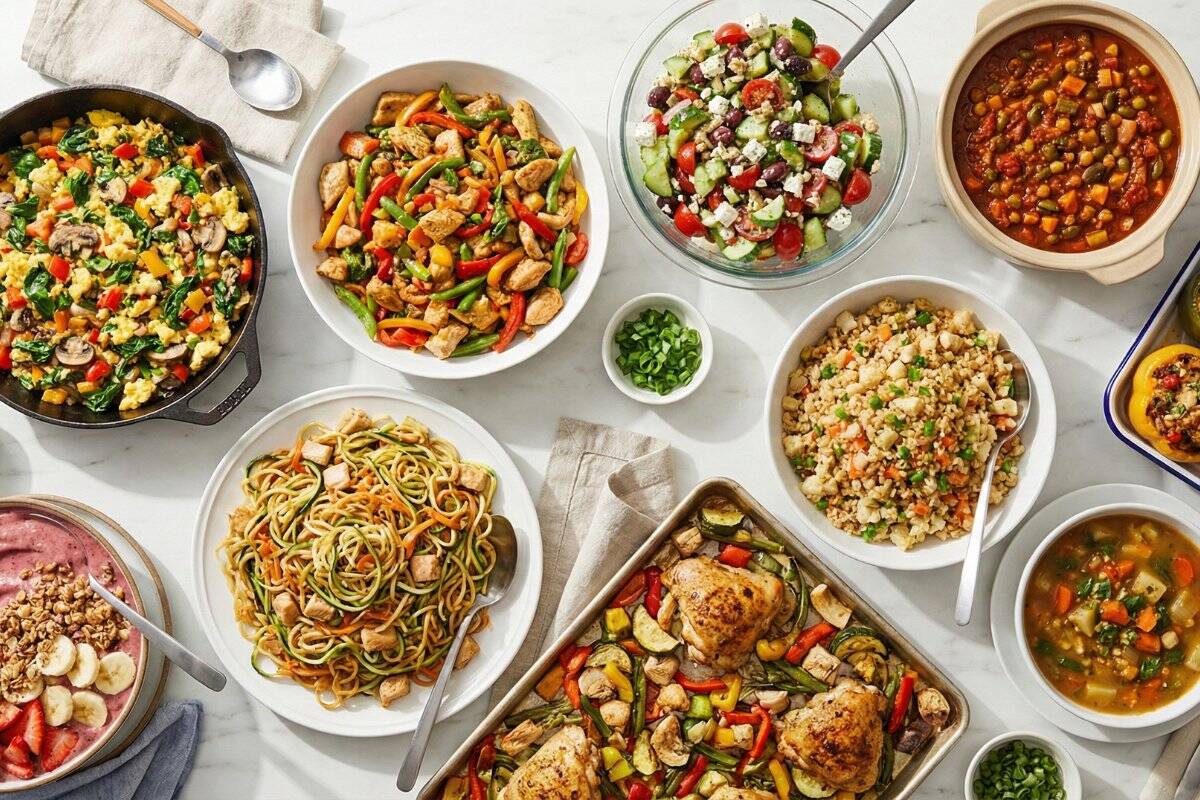
These 10 volumetric eating recipes changed everything. Each one lets you eat enormous portions without the calories. Each one keeps you full for hours. Each one tastes so good you’ll forget you’re trying to lose weight.
Let me show you how I ate my way to 31 pounds lighter.
10 Volumetric Eating Recipes That Let You Eat More and Weigh Less
Recipe 1: Giant Veggie-Loaded Egg White Scramble

⏱️ Prep: 10 min | ⏲️ Cook: 8 min | 👥 Serves: 1
📊 Calories: 245 | 🥗 Volume: 3 cups | 💪 Protein: 28g
This breakfast is bigger than my face. Literally.
Ingredients:
- 1 cup egg whites (or 6 egg whites)
- 2 whole eggs
- 2 cups baby spinach
- 1 cup mushrooms, sliced
- 1 cup cherry tomatoes, halved
- ½ cup bell peppers, diced
- ½ cup red onion, diced
- 1 cup zucchini, diced
- 2 tbsp nutritional yeast
- Salt, pepper, garlic powder
- Cooking spray
Instructions:
Spray large pan with cooking spray. Heat over medium.
Add onions, peppers, zucchini, mushrooms. Cook 5 minutes.
Add spinach and tomatoes. Cook until spinach wilts.
Whisk egg whites, whole eggs, and nutritional yeast together.
Pour over vegetables. Scramble everything together for 3 minutes.
Season with salt, pepper, garlic powder.
The volume is insane. This fills an entire dinner plate.
Why This Works: Volumetric eating is based on eating foods with low calorie density – meaning you get huge portions for minimal calories. This scramble is mostly vegetables (which are 90% water) plus protein. You’re eating 3 cups of food for under 250 calories.
My Experience: The first time I made this, I couldn’t finish it. I’m serious. I ate half, felt completely full, and saved the rest for later. That’s when I realized this approach was different. I wasn’t starving myself. I was literally too full to finish my breakfast. Within two weeks of eating like this, I stopped thinking about food between meals. The constant hunger that plagued every other diet just disappeared.
For more high-volume breakfast ideas, check out my healthy breakfast meal prep guide.
Recipe 2: Massive Chicken and Veggie Stir-Fry
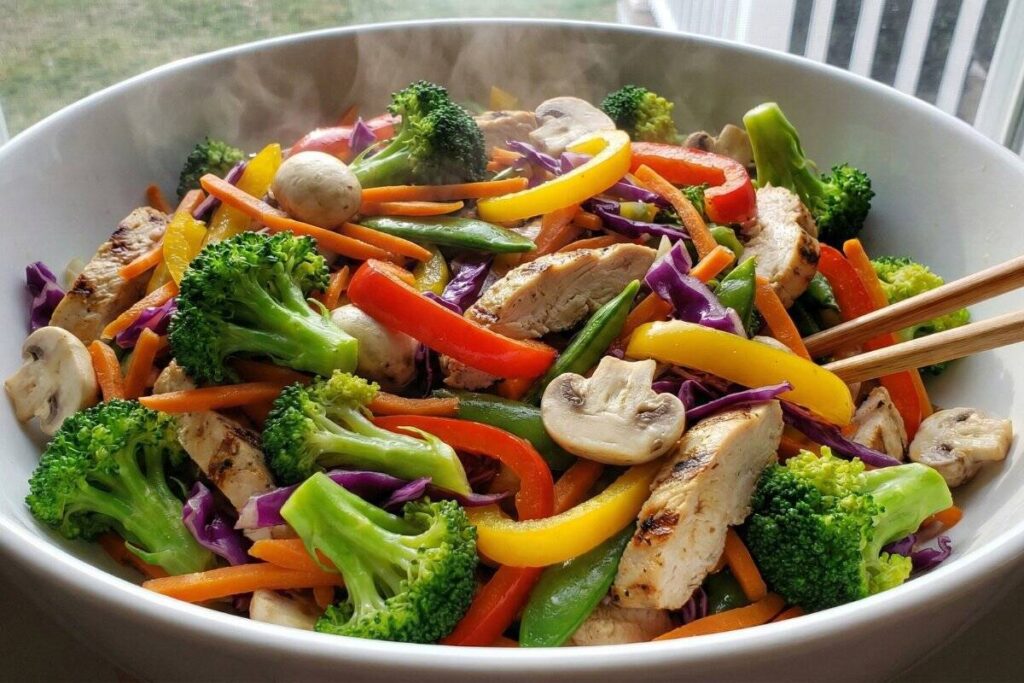
⏱️ Prep: 15 min | ⏲️ Cook: 12 min | 👥 Serves: 2
📊 Calories: 285 per serving | 🥗 Volume: 4 cups per serving | 💪 Protein: 32g
Four cups of food. Under 300 calories.
Ingredients:
- 12 oz chicken breast, sliced thin
- 3 cups broccoli florets
- 2 cups snap peas
- 2 cups bell peppers (red, yellow, orange)
- 1 cup mushrooms, sliced
- 1 cup carrots, julienned
- 1 cup cabbage, shredded
- 3 cloves garlic, minced
- 2 tbsp low-sodium soy sauce
- 1 tbsp rice vinegar
- 1 tsp sesame oil
- 1 tsp ginger, grated
- Red pepper flakes
- Cooking spray
Instructions:
Spray wok or large skillet with cooking spray. Heat to high.
Cook chicken until done, about 5 minutes. Remove and set aside.
Add more cooking spray. Add all vegetables except cabbage.
Stir-fry on high heat for 5 minutes. Vegetables should stay crisp.
Add cabbage, garlic, ginger. Cook 2 more minutes.
Mix soy sauce, rice vinegar, sesame oil. Pour over everything.
Add chicken back. Toss everything together. Cook 1 minute.
Sprinkle with red pepper flakes.
Why This Works: The key to volumetric eating is filling your plate with low-calorie-dense foods first. Vegetables have incredibly low calorie density – you can eat pounds of them for minimal calories. This stir-fry is 80% vegetables by volume but feels like a massive, satisfying meal.
My Experience: I used to eat stir-fry over rice. A huge mound of rice with some vegetables and protein on top. That version was easily 600+ calories. This version eliminates the rice entirely and triples the vegetables. The first week, I missed the rice. By week two, I realized I didn’t need it. The vegetables filled me up completely. Now I actually prefer it this way – more flavor, more crunch, same satisfaction.
Want more Asian-inspired meals? Try my 30 minute high protein dinners.
Recipe 3: Enormous Greek Salad Bowl

⏱️ Prep: 15 min | 👥 Serves: 1
📊 Calories: 320 | 🥗 Volume: 5 cups | 💪 Protein: 18g
Five cups of salad. You read that right.
Ingredients:
- 3 cups romaine lettuce, chopped
- 2 cups cucumber, diced
- 2 cups cherry tomatoes, halved
- 1 cup bell peppers, diced
- ½ cup red onion, thinly sliced
- ¼ cup Kalamata olives
- 2 oz feta cheese, crumbled
- 5 oz grilled chicken breast, sliced
Dressing:
- 1 tbsp olive oil
- 2 tbsp red wine vinegar
- 1 tbsp lemon juice
- 1 tsp oregano
- 1 clove garlic, minced
- Salt, pepper
Instructions:
Combine lettuce, cucumber, tomatoes, peppers, onion in giant bowl.
Top with olives, feta, and chicken.
Whisk dressing ingredients together.
Drizzle over salad. Toss everything.
This fills a mixing bowl. Not a salad bowl. A mixing bowl.
Why This Works: Leafy greens and water-rich vegetables are the foundation of volumetric eating. This salad is massive in volume but modest in calories because it’s primarily vegetables. The small amounts of feta and olive oil provide flavor and satisfaction without adding too many calories.
My Experience: Before volumetric eating, my salads were small side dishes. A handful of lettuce, some tomatoes, drowned in creamy dressing. Those “healthy” salads were 400+ calories and left me hungry an hour later. This salad is enormous. I eat it with a serving spoon because a fork takes too long. It takes me 20 minutes to finish. And I’m genuinely full for 4-5 hours afterward. The volume makes all the difference.
Looking for more Mediterranean options? Check out my Mediterranean diet meal prep.
Recipe 4: Massive Veggie-Packed Chili

⏱️ Prep: 20 min | ⏲️ Cook: 35 min | 👥 Serves: 6
📊 Calories: 265 per serving | 🥗 Volume: 2.5 cups per serving | 💪 Protein: 24g
This makes 15 cups of chili. FIFTEEN.
Ingredients:
- 1 lb lean ground turkey (93/7)
- 2 cans (15 oz each) black beans, drained
- 1 can (28 oz) crushed tomatoes
- 3 cups zucchini, diced
- 2 cups bell peppers, diced
- 2 cups mushrooms, diced
- 2 cups cauliflower, riced
- 1 cup carrots, diced
- 1 large onion, diced
- 4 cloves garlic, minced
- 3 cups low-sodium vegetable broth
- 2 tbsp chili powder
- 1 tbsp cumin
- 1 tsp smoked paprika
- Salt, pepper
- Fresh cilantro
Instructions:
Brown turkey in large pot. Drain any fat.
Add onions, peppers, carrots. Cook 5 minutes.
Add garlic and spices. Cook 1 minute.
Add zucchini, mushrooms, cauliflower rice.
Pour in crushed tomatoes, beans, and broth.
Bring to boil. Reduce heat. Simmer 30 minutes.
Top with fresh cilantro.
Why This Works: Traditional chili relies heavily on beans and meat for volume. This version bulks up the volume dramatically by adding pounds of vegetables. You’re eating more food while consuming fewer calories. The vegetables add fiber, nutrients, and volume without significantly increasing calorie density.
My Experience: My old chili recipe was 450 calories per bowl. I’d eat it with cornbread and sour cream. One meal was 700+ calories and I’d be hungry again in three hours. This version is completely different. I eat bigger bowls now – 2.5 cups instead of 1.5 cups. But I’m eating 200 fewer calories and staying full twice as long. The secret is the hidden vegetables. You barely notice them because they absorb the chili flavors, but they triple the volume.
Want more high-volume comfort food? See my high protein meal prep for weight loss.
Recipe 5: Giant Zucchini Noodle Pad Thai

⏱️ Prep: 20 min | ⏲️ Cook: 10 min | 👥 Serves: 2
📊 Calories: 295 per serving | 🥗 Volume: 3.5 cups per serving | 💪 Protein: 26g
Spiralized zucchini is volumetric eating magic.
Ingredients:
- 4 large zucchini, spiralized
- 8 oz shrimp, peeled and deveined
- 3 cups cabbage, shredded
- 2 cups bean sprouts
- 1 cup carrots, julienned
- 1 cup bell peppers, thinly sliced
- 3 green onions, chopped
- 3 cloves garlic, minced
- 2 eggs, beaten
- ¼ cup crushed peanuts
Sauce:
- 2 tbsp natural peanut butter (powdered PB works great)
- 2 tbsp low-sodium soy sauce
- 1 tbsp rice vinegar
- 1 tbsp lime juice
- 1 tsp Sriracha
- 1 tsp honey
Instructions:
Spiralize zucchini. Pat very dry with paper towels. Set aside.
Whisk sauce ingredients together with 2 tbsp water.
Spray large pan with cooking spray. Cook shrimp 3 minutes. Remove.
Add cabbage, carrots, peppers. Cook 3 minutes.
Push vegetables to side. Add eggs. Scramble.
Add zucchini noodles, bean sprouts, shrimp. Cook 2 minutes.
Pour sauce over everything. Toss 1 minute.
Top with green onions and crushed peanuts.
Why This Works: Traditional Pad Thai is delicious but calorie-dense. The noodles alone are 400+ calories per serving. Zucchini noodles are mostly water. Four large zucchini spiralized creates a massive pile of “noodles” for about 80 calories total. You’re eating the same volume but consuming a fraction of the calories.
My Experience: I was skeptical about zucchini noodles. They sounded like sad diet food. But when you cook them correctly (high heat, very quick, don’t let them get soggy), they’re actually good. The texture isn’t exactly like regular noodles, but the volume is incredible. I can eat a huge plate of this Pad Thai, feel completely satisfied, and still lose weight. That never happened with regular Pad Thai.
For more noodle alternatives, check my low calorie high protein meals.
Recipe 6: Massive Cauliflower Fried Rice
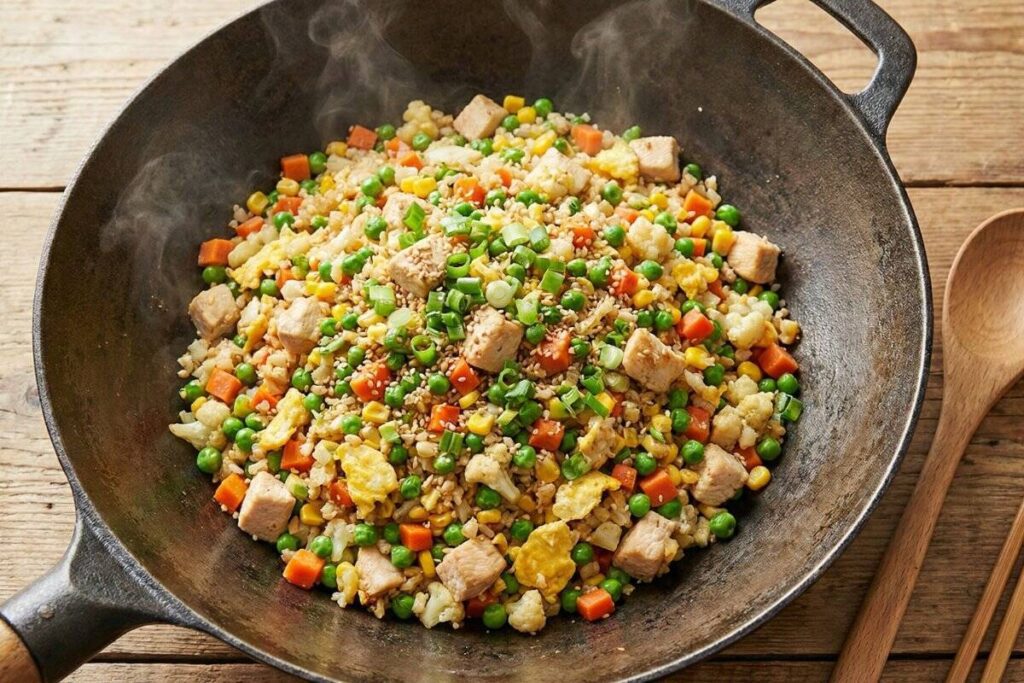
⏱️ Prep: 15 min | ⏲️ Cook: 12 min | 👥 Serves: 2
📊 Calories: 245 per serving | 🥗 Volume: 3 cups per serving | 💪 Protein: 22g
Three cups for 245 calories. Insane.
Ingredients:
- 1 large head cauliflower, riced (or 4 cups riced cauliflower)
- 8 oz chicken breast, diced small
- 2 cups mixed vegetables (peas, carrots, corn)
- 1 cup mushrooms, diced
- 1 cup bell peppers, diced
- ½ cup onion, diced
- 3 cloves garlic, minced
- 2 eggs, beaten
- 3 tbsp low-sodium soy sauce
- 1 tbsp rice vinegar
- 1 tsp sesame oil
- 2 green onions, sliced
- Cooking spray
Instructions:
Rice the cauliflower or use pre-riced. Pat dry with paper towels.
Spray large pan or wok with cooking spray. High heat.
Cook chicken until done. Remove.
Add onions, peppers, mushrooms. Cook 3 minutes.
Add garlic. Cook 30 seconds.
Push to side. Add eggs. Scramble.
Add cauliflower rice and mixed vegetables. Cook 5 minutes, stirring constantly.
Add chicken back. Pour in soy sauce, vinegar, sesame oil.
Toss everything. Cook 2 more minutes.
Top with green onions.
Why This Works: Regular fried rice is 400+ calories per cup because rice is calorie-dense. Cauliflower rice is mostly water and fiber. You can eat three times as much for the same calories. The texture is similar enough that your brain registers “I’m eating fried rice” but you’re actually eating mostly vegetables.
My Experience: Cauliflower rice was a game changer for me. I used to eat Chinese takeout fried rice multiple times per week. Each order was easily 800+ calories. I’d finish it, feel overly full and guilty, then be hungry again two hours later. This version is completely different. I eat enormous plates of it. Three full cups. I feel satisfied. And the scale keeps going down. I don’t feel deprived at all.
Want more Asian-inspired meals? Try my 15 minute healthy dinners.
Recipe 7: Enormous Protein-Packed Soup
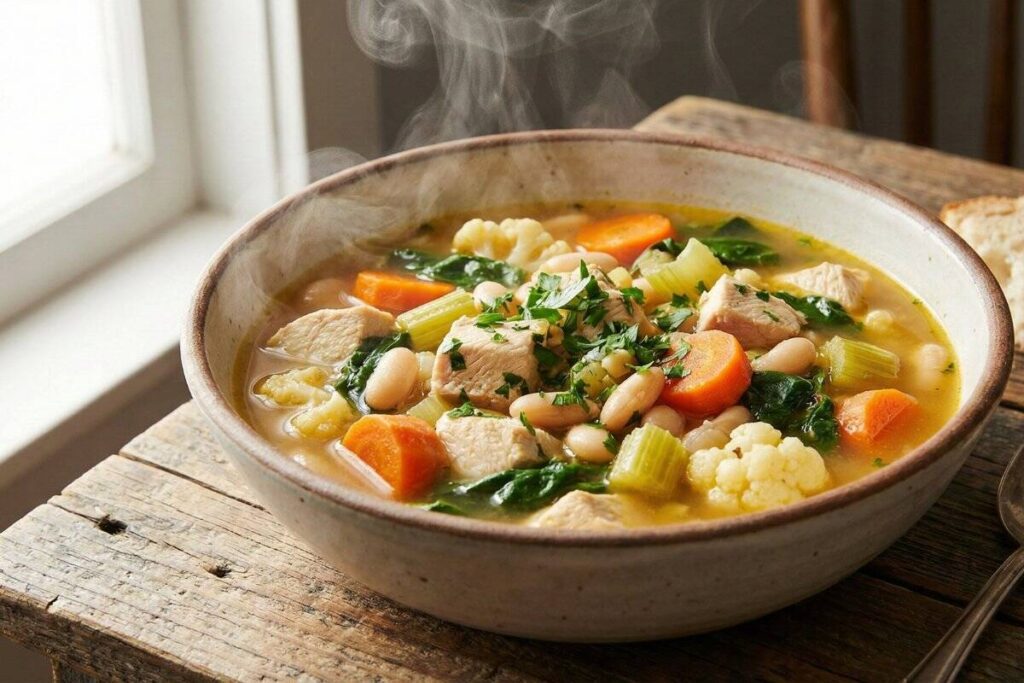
⏱️ Prep: 15 min | ⏲️ Cook: 30 min | 👥 Serves: 6
📊 Calories: 235 per serving | 🥗 Volume: 2.5 cups per serving | 💪 Protein: 28g
Soup is volumetric eating heaven.
Ingredients:
- 1 lb chicken breast, diced
- 6 cups low-sodium chicken broth
- 2 cans (15 oz each) white beans, drained
- 3 cups zucchini, diced
- 2 cups carrots, diced
- 2 cups celery, diced
- 2 cups cauliflower, chopped
- 2 cups spinach
- 1 large onion, diced
- 4 cloves garlic, minced
- 2 tsp Italian seasoning
- 1 tsp thyme
- 2 bay leaves
- Salt, pepper
- Fresh parsley
Instructions:
Spray large pot with cooking spray. Brown chicken. Remove.
Add onions, carrots, celery. Cook 5 minutes.
Add garlic and dried herbs. Cook 1 minute.
Pour in chicken broth. Add cauliflower, zucchini, bay leaves.
Bring to boil. Reduce heat. Simmer 20 minutes.
Add chicken, beans, and spinach. Cook 5 more minutes.
Season with salt and pepper. Remove bay leaves.
Top with fresh parsley.
Why This Works: Soup is naturally high-volume because it’s mostly liquid. But adding pounds of vegetables makes it even more filling while keeping calories low. Each bowl is huge – 2.5 cups – but only 235 calories. The combination of liquid, fiber, and protein keeps you full for hours.
My Experience: I eat this soup for lunch almost every day during my weight loss. I make a huge batch on Sunday. Heat up 2.5 cups for lunch. It’s hot, filling, satisfying. And I lose weight eating it. Before volumetric eating, I’d have a salad or sandwich for lunch and be starving by 3pm. Now I eat soup, feel completely satisfied, and don’t think about food until dinner. The volume makes all the difference.
For more soup recipes, see my cheap healthy meals guide.
Recipe 8: Giant Turkey and Veggie Stuffed Peppers
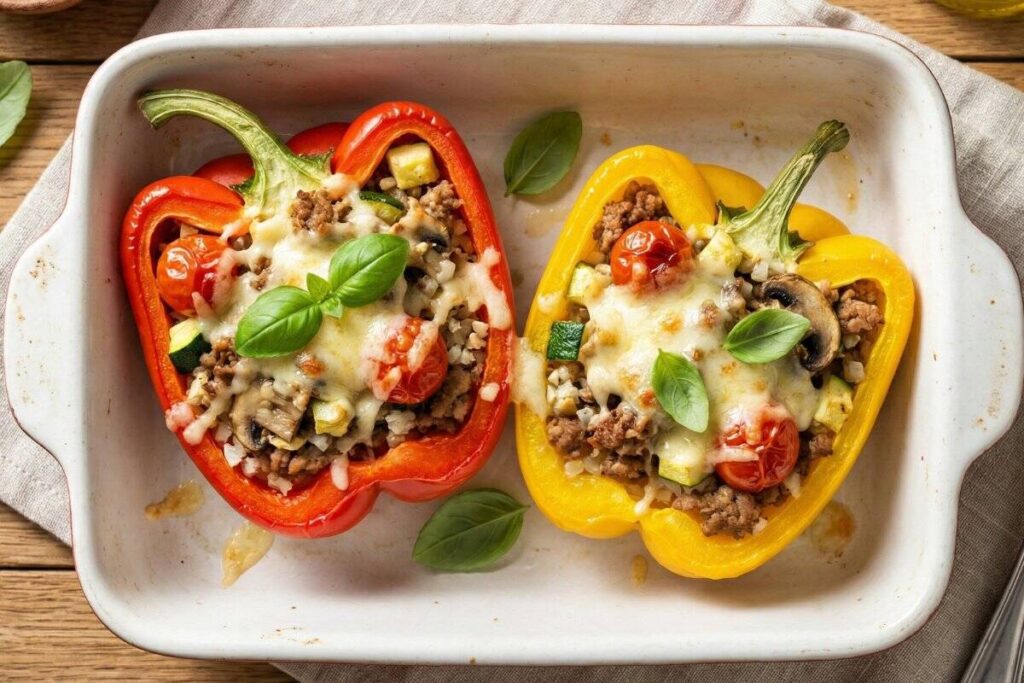
⏱️ Prep: 20 min | ⏲️ Cook: 35 min | 👥 Serves: 4
📊 Calories: 285 per serving | 🥗 Volume: 2 large pepper halves | 💪 Protein: 26g
You eat two entire pepper halves. TWO.
Ingredients:
- 4 large bell peppers, halved and seeded
- 1 lb lean ground turkey
- 2 cups cauliflower rice
- 1 cup zucchini, diced small
- 1 cup mushrooms, diced small
- 1 cup tomatoes, diced
- ½ cup onion, diced
- 3 cloves garlic, minced
- 1 can (15 oz) tomato sauce
- 1 tsp Italian seasoning
- ½ cup part-skim mozzarella, shredded
- Salt, pepper
- Fresh basil
Instructions:
Preheat oven to 375°F.
Brown turkey in pan. Drain fat. Set aside.
Sauté onions, mushrooms, zucchini for 5 minutes.
Add garlic, cauliflower rice, tomatoes. Cook 3 minutes.
Mix in turkey, half the tomato sauce, Italian seasoning. Season with salt and pepper.
Arrange pepper halves in baking dish. Fill each with turkey mixture.
Pour remaining tomato sauce over peppers.
Cover with foil. Bake 25 minutes.
Uncover. Top with mozzarella. Bake 10 more minutes.
Garnish with fresh basil.
Why This Works: Traditional stuffed peppers use rice as the main filler. Rice is calorie-dense. This version uses cauliflower rice and extra vegetables. You’re eating the same volume but consuming far fewer calories. The peppers themselves also add volume and fiber without many calories.
My Experience: Stuffed peppers were always a special occasion meal for me because they felt heavy. I’d eat one pepper half and feel overstuffed. These peppers are different. I eat two full halves – which is a huge amount of food visually – but I feel satisfied, not stuffed. And 285 calories for that much food feels impossible. But it works.
Want more veggie-packed meals? Try my high protein gluten free breakfast.
Recipe 9: Massive Berry Protein Smoothie Bowl

⏱️ Prep: 5 min | 👥 Serves: 1
📊 Calories: 285 | 🥗 Volume: 2.5 cups | 💪 Protein: 32g
This fills a cereal bowl completely.
Ingredients:
- 1 cup frozen strawberries
- 1 cup frozen mixed berries
- 1 scoop vanilla protein powder (25g protein)
- 1 cup unsweetened almond milk
- ½ cup plain Greek yogurt (nonfat)
- 1 cup ice cubes
- ½ tsp vanilla extract
Toppings:
- 1 cup fresh strawberries, sliced
- ½ cup fresh blueberries
- 2 tbsp sugar-free granola
- 1 tbsp chia seeds
Instructions:
Blend frozen berries, protein powder, almond milk, Greek yogurt, ice, vanilla until thick and smooth.
Pour into large bowl.
Top with fresh berries, granola, chia seeds.
Eat with a spoon.
Why This Works: Smoothie bowls are naturally high-volume because they’re mostly frozen fruit and liquid blended with air. This creates a huge portion that’s light and airy. The protein powder and Greek yogurt ensure you stay full despite the low calorie count.
My Experience: I used to drink smoothies. I’d finish in two minutes and still feel hungry. Smoothie bowls changed everything. The act of eating with a spoon, taking time to chew the toppings, makes your brain register fullness better. This bowl takes me 15 minutes to eat. It’s cold, refreshing, filling. And 285 calories for breakfast means I can eat more later. I’ve had this almost every morning for three months.
For more smoothie ideas, check my breakfast smoothies for weight loss and protein smoothie recipes.
Recipe 10: Giant Balsamic Chicken and Veggie Sheet Pan
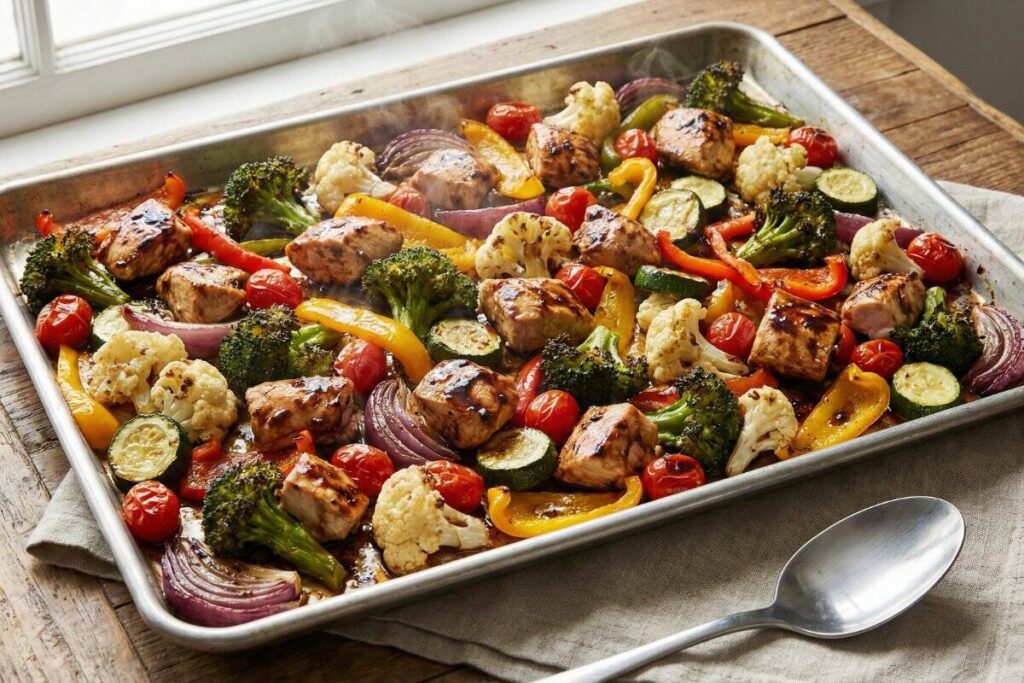
⏱️ Prep: 15 min | ⏲️ Cook: 25 min | 👥 Serves: 4
📊 Calories: 295 per serving | 🥗 Volume: 3 cups per serving | 💪 Protein: 34g
One sheet pan. Mountains of food.
Ingredients:
- 1.5 lbs chicken breast, cut into chunks
- 4 cups broccoli florets
- 3 cups cauliflower florets
- 2 cups bell peppers, large chunks
- 2 cups zucchini, large chunks
- 2 cups cherry tomatoes
- 1 red onion, cut into wedges
Marinade:
- ¼ cup balsamic vinegar
- 2 tbsp Dijon mustard
- 3 cloves garlic, minced
- 1 tbsp Italian seasoning
- 1 tsp honey
- Salt, pepper
- Cooking spray
Instructions:
Preheat oven to 425°F.
Whisk marinade ingredients together.
Toss chicken with half the marinade. Let sit 10 minutes.
Spread all vegetables on large sheet pan. Spray with cooking spray. Season with salt and pepper.
Arrange chicken pieces among vegetables.
Drizzle remaining marinade over everything.
Roast 25 minutes until chicken is cooked through and vegetables are tender.
Why This Works: Sheet pan meals naturally lend themselves to volumetric eating because vegetables roast beautifully and take up tons of visual space on your plate. This meal gives you 3 cups of food – mostly vegetables – with lean protein. It’s satisfying, delicious, and under 300 calories.
My Experience: Sheet pan dinners saved my weeknights. I come home exhausted, throw everything on a pan, roast it, and have dinner ready in 30 minutes. The portions are huge. I pile my plate high with vegetables and chicken. My husband eats the same meal and thinks he’s eating a normal dinner. Neither of us realizes how many vegetables we’re consuming. That’s the beauty of volumetric eating – it doesn’t feel like a diet.
Why Volumetric Eating Actually Works
I tried every diet. Keto. Paleo. Intermittent fasting. Calorie counting.
They all worked temporarily. Then I’d get too hungry. Too restricted. Too miserable.
I’d quit.
Volumetric eating is different.
The Science:
Research published in the American Journal of Clinical Nutrition shows that people eat similar volumes of food regardless of calorie content. Your stomach has stretch receptors that signal fullness based on physical volume, not calories.
This means you can manipulate your fullness by choosing foods with lower calorie density.
Calorie Density Explained:
- High calorie density: Lots of calories in small volume (oils, nuts, cheese, processed foods)
- Medium calorie density: Moderate calories per volume (lean meats, whole grains, legumes)
- Low calorie density: Few calories in large volume (vegetables, fruits, broth-based soups)
Volumetric eating focuses on low and medium calorie density foods. You eat normal or even large portions. But the calorie count stays moderate because you’ve chosen foods with more water, more fiber, more air.
What Happened to Me:
Month 1: Lost 8 pounds eating giant meals
Month 2: Lost 7 pounds, stopped feeling hungry between meals
Month 3: Lost 6 pounds, started craving vegetables
Month 4: Lost 5 pounds, felt normal eating this way
Month 5: Lost 5 pounds, reached my goal weight
Total: 31 pounds lost while eating until I was full at every meal.
My Volumetric Eating Strategy
I don’t follow strict rules. But I do follow patterns.
The Formula:
Every meal includes:
- Base: Huge portion of low-calorie vegetables (3-4 cups)
- Protein: Lean protein source (4-6 oz)
- Flavor: Herbs, spices, vinegars, low-calorie sauces
Weekly Meal Prep:
Sunday (2 hours):
- Spiralize 8 zucchini (store in airtight container)
- Rice 2 large cauliflowers
- Chop 10 cups of mixed vegetables
- Cook 2 lbs lean protein (chicken, turkey, shrimp)
- Make one large pot of soup
- Prep smoothie bowl ingredients in freezer bags
Daily Pattern:
- Breakfast: Smoothie bowl or giant scramble (2-3 cups)
- Lunch: Huge soup or salad (2.5-3 cups)
- Dinner: Sheet pan meal or stir-fry (3-4 cups)
- Snacks: Vegetables with Greek yogurt dip, fruit
The Key:
Always eat vegetables first. Fill your plate with vegetables. Add protein. Then if you’re still hungry, add a small portion of something else.
But usually, the vegetables and protein fill you up completely.
For more meal prep strategies, see my high protein meal prep and vegan meal prep guides.
Common Volumetric Eating Mistakes
I made all of these. Learn from me.
Mistake 1: Not Eating Enough Protein
First two weeks, I focused only on vegetables. Ate huge salads. Giant stir-fries. But kept them all vegetarian.
I was hungry constantly.
Added lean protein to every meal. Problem solved. Protein + volume = lasting fullness.
Mistake 2: Drinking Calories
Kept drinking lattes, juice, regular soda.
Liquid calories don’t trigger fullness the same way solid food does. You can drink 300 calories and not feel satisfied at all.
Switched to water, black coffee, tea, diet soda. Saved those calories for actual food I could chew.
Mistake 3: Avoiding All High-Calorie Foods
Tried to make everything low-calorie. Used fat-free everything. No nuts. No cheese. No olive oil.
The food tasted terrible. I was miserable.
Learned to use small amounts of high-calorie foods for flavor. A tablespoon of olive oil. An ounce of cheese. A few nuts. Just enough to make the food delicious without adding too many calories.
Mistake 4: Not Tracking Portions of Calorie-Dense Foods
Got comfortable with volumetric eating. Started adding “just a little” nut butter, cheese, oil.
Weight loss stalled.
Realized “a little” was actually a lot. Started measuring high-calorie additions. Weight loss resumed.
The vegetables and lean protein? Eat as much as you want. The oils, nuts, cheese? Measure those.
Quick Questions People Ask
Does volumetric eating work for weight loss?
Yes. I lost 31 pounds in five months. Never felt hungry. Never felt deprived.
The science backs it up too. Studies show volumetric eating leads to sustainable weight loss because you’re not fighting hunger constantly.
Can I eat unlimited vegetables?
Basically, yes. Non-starchy vegetables are so low in calories that you’d have to eat absurd quantities to overeat.
A pound of broccoli is 150 calories. You’re not going to accidentally overeat broccoli.
What about fruit?
Fruit is great for volumetric eating. It’s high in water and fiber. Just watch portions of dried fruit and fruit juice – those are calorie-dense.
Whole fresh fruit? Eat it.
Do I need to count calories?
Not really. I didn’t count calories. I just followed the pattern: massive vegetables, lean protein, small amounts of calorie-dense foods.
The scale moved consistently without tracking.
If you hit a plateau, then maybe track for a week to see where extra calories are hiding. Usually it’s cooking oils, nut butters, or cheese.
Can I eat carbs?
Yes. Volumetric eating isn’t low-carb. It’s low-calorie-density.
I eat potatoes, oats, rice, pasta. Just smaller portions than before, and always with tons of vegetables.
Check my high protein make ahead breakfast for carb-friendly options.
Is this sustainable long-term?
I’ve been eating this way for over a year now. Maintained my weight loss. Don’t feel restricted.
It’s sustainable because you’re eating real food in normal-looking portions. You’re just choosing foods that let you eat more volume for fewer calories.
More Volumetric Eating Resources
Want more high-volume recipes? Try my gut health breakfast recipes – they’re naturally high-volume because of the fiber.
Looking for quick options? My 30 minute high protein dinners and 15 minute healthy dinners work perfectly for volumetric eating.
Need snack ideas? Check high protein snacks for weight loss and healthy snack ideas.
Want breakfast variety? Browse healthy breakfast meal prep for more high-volume morning meals.
For budget-friendly volumetric meals, see my cheap healthy meals guide.
The Truth About Eating More and Weighing Less
For 20 years, I believed weight loss required suffering.
Tiny portions. Constant hunger. Obsessive calorie counting. Feeling deprived at every meal.
I was wrong.
Weight loss doesn’t require suffering. It requires strategy.
Choose foods with low calorie density. Eat large portions of those foods. Feel satisfied after every meal.
The weight comes off naturally because you’re eating fewer calories without feeling restricted.
I eat bigger plates of food now than I did when I was 31 pounds heavier. The difference is what’s on the plate.
Before: Small portions of calorie-dense foods. Always hungry. Always thinking about my next meal. Gaining weight steadily.
Now: Huge portions of low-calorie-dense foods. Always satisfied. Rarely think about food between meals. Maintaining my weight loss effortlessly.
The science works. The strategy works. The food tastes good.
Start with one volumetric eating recipe this week. Make the giant scramble for breakfast tomorrow.
See how you feel eating a huge plate of food for under 300 calories.
Within a week, you’ll understand why this approach is different.
Your hunger will decrease. Your portions will look bigger. The scale will start moving.
Choose volume. Choose satisfaction. Choose sustainable weight loss.